
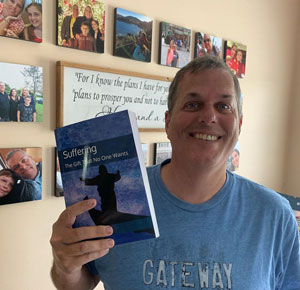
April 13, 2020 Original Interview. (RIP My Friend January 30, 2021 at age 47)
Pastor Matt Hearn was the founding pastor of Gateway Church in Bloomingdale, Georgia, where he became known for creating a church culture centered on authenticity, belonging, and practical faith. Rather than focusing on appearances or religious performance, Matt consistently emphasized that the church should be a place where imperfect people could encounter God's grace and grow together.
Before entering ministry, Matt resisted the idea of becoming a pastor despite growing up in a pastor's home. A mission trip to Russia dramatically reshaped his perspective and eventually led him into youth ministry before planting Gateway Church. His approachable personality, quick wit, and gift for storytelling allowed him to connect with people from every walk of life.
In later years, Pastor Matt became widely respected for the courage and transparency he displayed during his battle with synovial sarcoma. Rather than hiding his struggles, he openly shared the lessons God was teaching him through suffering, eventually writing Suffering: The Gift Nobody Wants. His reflections on faith, family, compassion, leadership, and hope encouraged thousands both inside and outside the walls of the church.
Pastor Matt is known for authenticity, encouragement, humor, and practical faith.
This interview preserves not only Pastor Matt's remarkable testimony but also the warmth, humor, humility, and unwavering faith that defined his life and ministry.
Pastor Matt Hearn: Finding Hope When Life Gives You Twelve Months to Live
How faith, humor, suffering, and one pastor's unwavering trust in God continue to inspire years after this unforgettable Easter conversation.
Editor's Note
Some interviews grow more meaningful with time.
This is one of them.
Originally recorded on Easter Sunday in 2020, this conversation captured Pastor Matt Hearn during one of the most challenging seasons of his life as he battled an aggressive form of cancer. None of us could fully appreciate then how important these words would become.
For me personally, this interview also represents something much deeper. Pastor Matt was the first pastor who truly believed in what Sandy and I were building through The Chris & Sandy Show. At a time when some questioned whether an entertainment-focused interview platform had a place in God's kingdom, he simply encouraged us to keep going.
Years later, after Pastor Matt's passing, those moments carry even greater weight.
This conversation now stands not only as an interview, but as part of his legacy.
More Than a Pastor
Every community has people who quietly change lives.
Not through headlines.
Not through celebrity.
But through simple moments of encouragement that people never forget.
For countless families in Savannah / Pooler, Georgia, Pastor Matt Hearn became one of those people.
As the founding pastor of Gateway Church, he wasn't interested in creating a perfect church filled with perfect people. Instead, he wanted to build a place where those who felt overlooked, forgotten, or out of place could finally discover they belonged.
During the conversation, Matt jokingly describes Gateway as something like the "Island of Misfit Toys." It wasn't meant as criticism—it was one of the greatest compliments he could give his church.
People who never felt like they fit anywhere else found a home there.
That philosophy would eventually define not only Gateway Church but Matt's entire ministry.
When Life Changes Overnight
Long before cancer became part of his story, Matt never imagined becoming a pastor at all.
Growing up as the son of a pastor, he actually resisted ministry.
Like many children raised in church, he wanted to find his own path.
It wasn't until a mission trip to Russia that everything began to change.
Watching people desperately hungry for God reshaped his understanding of faith. What had once felt ordinary suddenly became deeply personal.
That experience eventually led him into ministry, then youth leadership, and finally the calling to plant Gateway Church.
Like most church plants, the beginning wasn't glamorous.
Services were held in borrowed spaces.
The air conditioning sometimes failed.
Attendance fluctuated.
There were Sundays when everything that could go wrong seemed to happen.
Matt laughs while remembering one particularly difficult service where the worship team struggled, the building was unbearably hot, and frustration filled the room. Driving home afterward, he seriously questioned whether he was the right person to lead the church.
Instead of quitting, however, he discovered that some of the people witnessing those difficult days weren't discouraged.
They were inspired.
Those early struggles became the foundation of something much larger than he ever imagined.
The Diagnosis That Changed Everything
Then came the pain.
At first it arrived quietly.
Sharp discomfort during the night.
Migraines.
Fatigue.
Like many people, Matt initially ignored the symptoms.
Eventually the pain became impossible to dismiss.
A scan revealed a massive tumor.
Surgery removed nearly fifteen pounds of cancer.
Then came the words no family ever wants to hear.
His oncologist estimated he had roughly twelve months to live.
Matt remembers turning toward the window, trying to hide his tears.
What overwhelmed him wasn't simply the possibility of death.
It was the thought of leaving behind his wife and children.
That moment became one of the emotional turning points of the interview—not because of fear alone, but because of what followed.
Instead of asking why this was happening, Matt slowly began asking a different question.
"What is God going to do through this?"
That shift changed everything.
Discovering God in the Middle of Pain
One of the most remarkable aspects of Pastor Matt's story is that cancer didn't strengthen his faith because it provided easy answers.
It strengthened his faith because it stripped away distractions.
Every morning became intentional.
Scripture took on fresh meaning.
Prayer became conversation rather than routine.
God's presence became something experienced rather than merely discussed.
Matt explains that before cancer he believed he was in God's hands.
After cancer, he simply became more aware of it.
That perspective offers one of the interview's greatest lessons.
Faith doesn't always remove suffering.
Sometimes suffering removes everything that keeps us from recognizing God's presence.
Miracles Beyond Medicine
Perhaps the most unforgettable story arrives when Matt recalls returning for follow-up scans.
His doctor studied the computer screen repeatedly.
Looking back and forth between the images and Matt, the physician finally admitted something unexpected.
"I don't understand."
After another pause came the statement Matt never forgot.
"If I believed in miracles..."
Matt smiled while remembering his own response.
"It's a good thing I do."
Neither statement minimizes medicine.
Instead, both capture the mystery that sometimes exists between medical science and human experience.
For Matt, surviving wasn't simply about living longer.
It became another opportunity to encourage people walking through impossible circumstances.
When Suffering Becomes Compassion
One of the most profound moments in the conversation comes when Pastor Matt explains what cancer actually changed inside him.
It wasn't simply his health.
It wasn't his schedule.
It wasn't even his priorities.
It was his heart.
Before walking through cancer, Matt admits he likely would have prayed for someone from a distance if he saw them hurting. After experiencing his own suffering, something inside him shifted.
He recalls walking through a shopping mall when he noticed a woman sitting alone wearing a scarf that clearly covered the effects of chemotherapy. She appeared to be quietly crying while waiting for her family.
Years earlier, he probably would have continued walking.
This time he stopped.
He sat beside her.
Asked if she was okay.
Then did something that felt both simple and extraordinary.
He asked if he could pray for her.
That story beautifully illustrates perhaps the greatest lesson of the interview.
Pain often teaches us to recognize pain in others.
As Matt simply puts it:
"Suffering makes you aware of suffering in other people."
It's a sentence that extends far beyond cancer.
People who have battled addiction often recognize addiction in others.
Parents who have lost children understand grieving parents.
Families who have experienced financial hardship notice quiet struggles others miss.
Those who have walked through depression often recognize hidden pain behind someone else's smile.
Suffering doesn't automatically make people compassionate.
But when surrendered to God, it often becomes the very thing that expands our capacity to love.
Humor That Refused to Disappear
Despite discussing life-threatening illness, this conversation never becomes overwhelmingly heavy.
That is largely because of Matt's remarkable sense of humor.
He jokes about being "too handsome to die."
He laughs about surviving brain surgery by claiming he literally has "half a brain."
He teases doctors.
He pokes fun at himself.
He even jokes that after carrying a fifteen-pound tumor, his wife should stop complaining about pregnancy.
Those moments never minimize cancer.
Instead, they reveal something important.
Humor became one of the ways Matt chose hope.
Many people who have endured unimaginable suffering understand this paradox.
Sometimes laughter isn't denial.
Sometimes laughter is survival.
Throughout the interview, Matt demonstrates that joy and pain can exist together.
Faith doesn't require pretending everything is okay.
It simply refuses to allow darkness to have the final word.
Leadership Looks Like Encouragement
One section of this interview has become especially meaningful to the history of The Chris & Sandy Show.
Chris shares something deeply personal.
Launching an entertainment interview platform as a Christian wasn't always met with support.
Some questioned whether interviewing country artists, actors, and entertainers could really honor God.
There were seasons filled with uncertainty.
Questions.
Financial sacrifice.
Self-doubt.
Then one Sunday before church, Pastor Matt walked over and said something completely unexpected.
"I'm proud of what you and Sandy are doing."
Chris explains that no local spiritual leader had ever said those words before.
Matt's response perfectly reflects his heart as a pastor.
He explains that he hadn't planned to say it.
He simply felt God prompting him to encourage someone who needed it.
Then he says something every leader should remember:
"Part of my job is to pour courage into people."
That sentence may quietly be one of the greatest leadership principles in the entire interview.
Real leaders don't simply give instruction.
They give courage.
Sometimes people don't need better strategies.
They need someone they respect to believe in them long enough for them to believe in themselves again.
Looking back years later, it's impossible not to recognize the significance of that conversation.
The Chris & Sandy Show would eventually grow into hundreds of interviews with artists, actors, athletes, authors, pastors, entrepreneurs, and public figures.
Pastor Matt never saw the full scope of where the platform would eventually go.
But he believed in it while it was still becoming.
That's what great leaders do.
A Church That Felt Like Home
Throughout the interview, another recurring theme quietly emerges.
Gateway Church wasn't trying to compete with other churches.
It simply wanted to become a place where people felt seen.
Chris shares multiple stories that illustrate this culture.
He remembers pastors carrying chairs when services overflowed instead of expecting volunteers to do everything.
He recalls watching the worship team grow over time instead of chasing perfection from the beginning.
Most importantly, he explains something many listeners likely related to.
For much of his life, he never felt like he truly fit anywhere.
Until Gateway.
Matt's response is simple.
Gateway had unintentionally become a place for people who had always lived on the outside looking in.
That culture of acceptance wasn't created through marketing.
It grew from humility.
The result was a church that welcomed people exactly where they were while still encouraging them toward spiritual growth.
7 Lessons We Learned From This Conversation
Lesson 1
Encouragement Can Change Someone's Future
Most people underestimate the power of a few sincere words.
Pastor Matt probably didn't think twice about telling Chris he was proud of what he and Sandy were building. For him, it was simply another opportunity to encourage someone who looked discouraged.
Years later, that brief conversation still stands out.
Not because it made headlines.
Not because it went viral.
Because it arrived at exactly the right moment.
Leadership is often measured by platforms, titles, or influence.
This interview reminds us that true leadership is frequently measured by encouragement.
One sentence can become the reason someone refuses to quit.
One conversation can alter someone's confidence.
One unexpected affirmation can become part of another person's life story.
Perhaps that's why Pastor Matt viewed one of his greatest responsibilities as "pouring courage into people."
It's difficult to imagine a more fitting description of servant leadership.
Lesson 2
Suffering Doesn't Automatically Change Us—It Reveals What We Choose to Become
Pain affects everyone.
Transformation does not.
Throughout the interview, Pastor Matt never suggests cancer was good.
He never minimizes its difficulty.
He openly discusses fear, uncertainty, surgeries, and heartbreaking conversations with doctors.
Yet somewhere inside those experiences, another decision quietly emerged.
Rather than asking only, "Why is this happening?"
He began asking,
"What does God want to do through this?"
That subtle shift changed everything.
His suffering didn't disappear.
But its purpose expanded.
Instead of becoming more bitter, he became more compassionate.
Instead of withdrawing from people, he became more available to them.
Instead of protecting himself emotionally, he learned to recognize suffering in strangers.
The circumstances remained painful.
The person inside those circumstances became remarkably different.
For readers, that's an invitation worth considering.
While we cannot always control what happens to us, we often have far more influence over who we become because of it.
Lesson 3
Compassion Usually Comes After Pain
One of the simplest statements Pastor Matt made may also be one of the most profound:
"Suffering makes you aware of suffering in other people."
Those ten words explain why some of the kindest people you'll ever meet are often those who have experienced life's deepest wounds.
Before cancer, Matt admits he probably would have prayed quietly for someone hurting. After cancer, he stopped walking past people carrying invisible burdens. Instead, he walked toward them.
His story about meeting a woman battling cancer in the mall beautifully illustrates this transformation. There was no stage. No audience. No sermon. Just one hurting person recognizing another.
That moment reminds us that compassion isn't merely feeling sorry for someone.
Compassion moves.
It stops.
It listens.
It prays.
It stays.
In a culture that often teaches us to avoid uncomfortable situations, Pastor Matt's example challenges us to move closer instead of farther away.
Sometimes the greatest ministry we'll ever have is simply noticing the people everyone else walks past.
Lesson 4
Faith Doesn't Remove Uncertainty—It Changes How We Walk Through It
One of the refreshing qualities about this conversation is that Pastor Matt never pretends faith eliminates fear.
When doctors told him he likely had only twelve months to live, he cried.
He worried about his wife.
He worried about his children.
He wrestled with the reality of what lay ahead.
None of those emotions indicated weak faith.
They revealed honest humanity.
Too often, people mistakenly believe that trusting God means never experiencing anxiety, grief, or uncertainty.
Pastor Matt demonstrates something much healthier.
Faith isn't pretending everything will work out exactly the way we hope.
Faith is believing God remains present even when we don't know how the story ends.
Perhaps that's why one of his most powerful observations is so simple:
"It's always been in God's hands. We're just more aware of it now."
Cancer didn't suddenly place his life into God's hands.
It simply removed the illusion that he was ever in control.
That's true for every one of us.
Most of us simply don't realize it until life interrupts our plans.
Lesson 5
Real Leadership Gives Away Courage
Throughout this interview, Pastor Matt says something that every leader—whether in ministry, business, education, or family—should write down:
"Part of my job is to pour courage into people."
Leadership is often confused with visibility.
Some believe leadership is about standing in front.
Others think it's about making decisions.
Still others define it by authority.
Matt offers a completely different perspective.
Leadership is helping someone else believe they can keep going.
When Chris shares how discouraged he had become while building The Chris & Sandy Show, Matt explains that encouraging him wasn't planned.
He simply felt prompted to do it.
Years later, those few words still matter.
That reminds us something important.
We rarely know how close someone is to giving up.
A short conversation.
A sincere compliment.
An unexpected phone call.
A simple "I'm proud of you."
Any one of those moments might become the turning point in another person's story.
Leadership isn't measured only by what we accomplish.
It's measured by how many people we help continue their own journey.
Lesson 6
Joy Can Coexist With Pain
If someone read only the transcript's serious moments, they might assume this interview is emotionally exhausting.
It isn't.
Because Pastor Matt refuses to surrender his sense of humor.
Throughout the conversation he jokes about everything from surgery to brain tumors to negotiating with friends.
Those moments never disrespect suffering.
Instead, they demonstrate resilience.
People who have experienced significant hardship often understand this paradox.
Sometimes laughter isn't the absence of pain.
It's evidence that pain hasn't won.
Christian joy has never depended upon perfect circumstances.
It has always depended upon hope.
Matt's laughter doesn't deny cancer.
It declares that cancer doesn't get the final word.
That perspective becomes one of the most inspiring characteristics throughout the conversation.
Readers walk away recognizing that strength isn't always loud.
Sometimes strength sounds like someone finding another reason to smile despite circumstances that would understandably crush many others.
Lesson 7
Legacy Is Built Long Before People Realize It
When this interview was recorded in 2020, neither Chris nor Pastor Matt could fully understand what it would eventually become.
At the time, it was simply another episode.
Looking back today, it has become much more.
It preserves Pastor Matt's voice.
His humor.
His theology.
His compassion.
His leadership.
His heart.
It also captures a quiet moment in which he encouraged two people trying to build something that very few understood.
That's what legacy often looks like.
It isn't usually created through one extraordinary event.
It grows through thousands of ordinary moments.
A conversation after church.
A prayer in a shopping mall.
A kind word to someone questioning themselves.
A sermon.
A smile.
A hospital visit.
A simple act of encouragement.
By the time people recognize someone's legacy, it has often been quietly built over decades.
Pastor Matt's influence wasn't ultimately measured by the size of Gateway Church.
It was measured by the lives he helped shape.
This interview ensures those moments continue reaching people for years to come.
THE SINGLE BIGGEST LESSON FROM THIS INTERVIEW
If readers remember only one lesson from this conversation five years from now, it should be this:
God can transform suffering into compassion if we allow Him to.
That doesn't mean suffering is good.
Pastor Matt never suggests anyone should seek pain.
Cancer remained painful.
Loss remained heartbreaking.
Fear remained real.
But somewhere inside those difficult experiences, God quietly began changing the person experiencing them.
The miracle wasn't only surviving longer than expected.
The miracle was becoming more compassionate.
More grateful.
More courageous.
More dependent on God.
More intentional with family.
More willing to stop for strangers.
That's the transformation that gives this interview lasting significance.
Because every reader will eventually face some form of suffering.
Very few of us get to choose whether pain enters our lives.
We do, however, have tremendous influence over whether that pain makes us harder or softer.
Pastor Matt chose compassion.
That may be his greatest legacy.


