
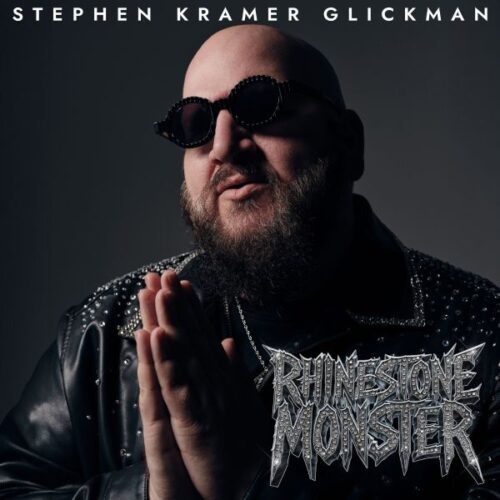
Stephen Kramer Glickman is an actor, comedian, voice actor, and recording artist best known for portraying Gustavo Rocque on Nickelodeon's Big Time Rush. His unforgettable performance as the demanding music producer introduced him to audiences around the world and helped establish a career spanning television, film, comedy, animation, and music.
But Stephen's creative interests extend far beyond the character that made him recognizable.
From his early work on HBO's Deadwood to his experiences performing alongside Big Time Rush, Stephen has continued exploring different ways to entertain audiences. His musical projects, including Rhinestone Monster, reflect his interest in reimagining familiar songs through his own arrangements and vocal performances.
Creativity has been part of Stephen's identity since childhood. Encouraged by his mother, he developed a lasting love for performing, storytelling, comics, and imaginative expression. Those interests continue to influence the projects he pursues today.
During his appearance on The Chris & Sandy Show, Stephen offered a personal look at the experiences behind his career, including unexpected opportunities, the challenges of playing Gustavo, the relationships that sustain him, and the importance of finding happiness beyond professional accomplishments.
His story is ultimately about remaining connected to what makes life meaningful while continuing to pursue the work you love.
Stephen Kramer Glickman: Beyond Gustavo, Finding Happiness in the Life He's Creating
Best known for playing Gustavo Rocque on Nickelodeon's Big Time Rush, Stephen Kramer Glickman has spent years making audiences laugh. But behind the familiar character is a man whose journey has been shaped by a mother's encouragement, unexpected opportunities, creative ambition, and a growing appreciation for the people who make life meaningful.
For millions of viewers who grew up watching Big Time Rush, Stephen Kramer Glickman will always be Gustavo Rocque.
The demanding, larger-than-life music producer became one of the show's most recognizable characters, known for his explosive personality, constant frustration, and unforgettable outbursts.
But the actor behind Gustavo has a much quieter way of describing himself.
"I'm just a simple man," Stephen told The Chris & Sandy Show. "Just a simple man who loves to see the world and loves to make things for the world."
It's an interesting description from someone whose career has included television, comedy, voice acting, music, and performances in front of enormous audiences.
Yet throughout the conversation, Stephen kept returning to something that had little to do with fame.
He wants to enjoy his life.
Not someday, after the next album, television role, or major opportunity.
Now.
And understanding how he arrived at that point means looking beyond the character that made him famous.
A Career That Almost Began With Pirates
Stephen doesn't describe entertainment as a profession he selected from several possibilities.
As he remembers it, entertaining was the one thing he always knew how to do.
Acting, performing comedy, playing piano, writing, and making music came naturally to him. Traditional academic subjects were another story.
He recalled struggling with mathematics in elementary school. His mother met with a school counselor, concerned about his future. The counselor reassured her that her son would eventually have people who could handle the mathematics for him.
It was an unusual response, but Stephen remembered the encouragement.
His mother believed in his artistic abilities, and that confidence helped establish something important: he didn't grow up feeling that entertainment was an unrealistic dream he needed to abandon.
He didn't have a conventional backup plan.
Still, believing you belong in entertainment and discovering you can actually make a living doing it are two different things.
For Stephen, that realization came through an unexpected opportunity.
He attended an open casting call for Pirates of the Caribbean 2, standing among hundreds of other men hoping to be selected.
The audition didn't lead to a role in the film.
Instead, someone involved in casting suggested he might be right for HBO's Deadwood.
Stephen drove to the production location, unsure whether he would even fit the available costumes. He was hired to work as a background cowboy.
The experience was physically uncomfortable.
He was tired, covered in mud, and working long hours.
And he loved it.
"I was tired. I was uncomfortable. I was covered in mud. And I loved it."
For Stephen, that was the revelation.
He could have an exhausting day on a television set and still want to return the next morning.
The difficult parts didn't convince him to quit. They confirmed that he was where he wanted to be.
The Audition That Created Gustavo Rocque
Years later, another audition would change Stephen's career in ways he couldn't have predicted.
When he arrived to audition for Big Time Rush, he initially believed the project involved animation.
He dressed casually, wearing the kind of clothes he normally wore.
Then he looked around the room.
Other actors appeared older, dressed formally, and seemed to fit a very different description of the character.
Stephen felt out of place.
He called his manager, who reminded him of an exaggerated personality Stephen sometimes performed as a joke: a self-important man who acted as though he deserved special treatment.
His manager encouraged him to bring that energy into the audition.
Stephen did.
He auditioned in the afternoon, received a callback shortly afterward, and learned the following morning that he had been cast.
The character became Gustavo Rocque.
What followed was five years of work on a Nickelodeon series that would become part of a generation's childhood.
Stephen admitted that he had no idea how successful the show would become.
He remembered speaking with a network executive shortly before its premiere, expressing hope that audiences would enjoy it.
The executive was far more confident.
Stephen recalled being told that the network intended to make the premiere an event children wouldn't want to miss.
The show's success changed his career, although recognition developed differently than he might have expected.
At first, many of the people who knew Gustavo were children.
As those viewers grew older, the character followed them into adulthood.
Stephen now encounters people who remember him from Big Time Rush in airports, businesses, and everyday situations.
The audience grew up.
Their connection to Gustavo remained.
But there was another side to playing such an energetic character.
Gustavo's constant yelling took a toll on Stephen's voice. He recalled repeatedly experiencing vocal strain and illnesses such as laryngitis.
There was no understudy who could step in whenever he needed to recover.
The work still had to be done.
That contrast between the entertaining character audiences loved and the physical demands of portraying him became one of the clearest examples of the sacrifices behind Stephen's success.
Music From a Happier Place
Stephen's creative interests have never been limited to acting.
Music has become an increasingly important part of his professional life, giving him another way to express himself outside the characters audiences know.
His album Rhinestone Monster, scheduled for release December 4, 2026, grew out of performances during the Big Time Rush world tour.
Stephen explained that he and his musicians had performed approximately 25 songs on the road. When it came time to record an album, they chose the arrangements they liked most, particularly those that brought something different to the original material.
He spoke enthusiastically about recording "Welcome to the Black Parade," which required extensive work and a large group of musicians.
He also discussed "Die on This Hill" and his version of "Drivers License," featuring Edwin McCain.
For Stephen, working with McCain meant more than collaborating with another musician.
He described him as someone he admired and could turn to for advice about the music business.
But the most revealing part of Stephen's discussion about music wasn't about any particular song.
It was about how his life had changed.
"I'm in a much happier place in my life than I was when I started recording music."
He explained that much of his earlier recorded music had been emotionally heavy.
Now, he has a girlfriend he loves, friendships he values, a supportive family, and greater satisfaction with his career.
Those changes have influenced what he wants to create.
There is room for more upbeat music and more playful performances.
He joked that a song like "Sledgehammer" would be difficult to perform convincingly while feeling miserable.
The observation was funny, but it revealed something meaningful.
His music isn't simply changing because his professional opportunities have changed.
It's changing because he has.
The Freedom to Choose What Comes Next
Stephen has no shortage of ideas.
During the interview, he described developing an animated short film, a podcast, a humorous memoir, a charity stage project, and new music.
Each project represents a different part of his creativity.
But having so many interests has also forced him to think carefully about where he spends his time.
He explained that he sometimes receives offers for projects that don't fit with the work he is already pursuing.
Earlier in a career, an actor might feel pressure to accept nearly every opportunity.
Stephen now approaches those decisions differently.
A project needs to fit the life he has created.
If it doesn't, the financial opportunity needs to be significant enough to help him pursue other creative work later.
It's a practical distinction, but also a personal one.
Stephen enjoys living in Los Angeles. He values his relationships and wants time for the projects he cares about.
He isn't interested in disrupting all of that simply because another opportunity appears.
His career remains ambitious.
His priorities have become more intentional.
He also emphasized the importance of the professionals who help make those ambitions possible.
Stephen praised his manager, Gary Osdall, and agent, Joey Flaherty, for taking his ideas seriously, even when those ideas are unconventional.
He credited their support with helping make his touring experience with Big Time Rush possible.
To Stephen, a good professional team doesn't merely find the next job.
It understands the larger life and career someone is trying to build.
The Garage Sale That Helped Preserve His Imagination
One of the most personal moments of the interview came from a question asked by Chris and Sandy's teenage son, Lil Chris.
He wanted to know Stephen's favorite memory from his teenage years.
Stephen didn't mention meeting a celebrity or achieving an early career milestone.
He remembered going to a garage sale with his mother.
As a teenager, he loved action figures and comic-book characters. But he was reaching an age when those interests could feel embarrassing.
Like many young people, he was becoming aware of the pressure to appear older and more socially acceptable.
Then his mother took him to a garage sale in an affluent neighborhood.
There, they discovered an extraordinary collection of action figures.
Stephen remembered seeing cases filled with toys from Star Wars, Marvel, DC, Masters of the Universe, and other franchises.
His mother asked the seller how much she wanted for the entire collection.
The answer was approximately $100.
She bought them.
What might have seemed like an ordinary childhood purchase became something Stephen still remembers decades later.
The toys helped reconnect him with the imaginative side of himself he had begun to lose.
Today, he still collects action figures, paints, creates, and maintains an interest in comics.
He has even had opportunities to write comic books professionally.
Looking back, he sees his mother's decision as more than an act of generosity.
She recognized something important in her son and helped him hold on to it.
The story offers a different way of thinking about childhood interests.
Sometimes the things young people are encouraged to outgrow are the very things that help them discover who they are.
The People Who Make Success Meaningful
When Stephen was asked what advice he would give someone hoping to follow a similar career path, he didn't begin with auditions, agents, or networking.
He talked about support.
He acknowledged how fortunate he has been to have a mother who believed in him, along with a supportive sister, extended family, girlfriend, and friends.
He also recognized that not everyone receives encouragement from the people they expect.
His advice was to accept genuine support wherever it comes from.
One story made that message especially personal.
Stephen recalled speaking with a close friend while feeling stressed about a song he was working on.
He initially dismissed the subject, assuming his friend wouldn't understand the music business.
His friend challenged that assumption.
Just because he didn't work in music didn't mean he wasn't interested in what was happening in Stephen's life.
The exchange changed their friendship.
Stephen realized that people don't need to understand every detail of someone's work to care about their experiences.
Sometimes they simply want to be included.
That realization helped the friendship grow deeper.
It also reinforced something Stephen has come to value: the people surrounding a career can matter as much as the career itself.
The conversation eventually turned toward his hopes for the future.
Stephen talked about wanting to own a house, return to a regular role on an animated children's series, and continue creating.
But he also mentioned something far less glamorous.
He hopes for health and happiness for himself and the people he loves.
For a man who has performed in major venues, appeared on successful television shows, and built a career across several creative industries, those hopes were refreshingly ordinary.
And perhaps that's the point.
Stephen Kramer Glickman has spent years making audiences laugh, sing along, and remember a character named Gustavo Rocque.
He still has ambitious plans.
There are albums to release, performances to give, and ideas waiting to become reality.
But beneath all of that, his outlook has become increasingly simple.
He wants to create things.
He wants the people around him to be happy.
And he wants to remember why he started.
"I hope that I never forget to have fun."
It may be the most important ambition he shared.
Because after everything he has accomplished, Stephen isn't simply trying to build a bigger career.
He's trying to enjoy the life that career has helped him create.
About The Chris & Sandy Show
The Chris & Sandy Show is a family-led interview program hosted by Chris and Sandy Benton, with their children Lil Chris and Katelynn joining conversations with guests from entertainment and beyond.
Launched in January 2020, the show goes beyond professional accomplishments to explore the personal journeys, challenges, relationships, and lessons that shape the people behind the public image.
7 Lessons We Learned From Stephen Kramer Glickman
From a childhood garage sale to the pressures of Hollywood and the importance of genuine friendships, Stephen Kramer Glickman's conversation with The Chris & Sandy Show offered reminders about creativity, purpose, happiness, and the people who help us become who we are.
Lesson 1: Never Lose the Part of Yourself That Makes You Feel Alive
There is something powerful about the way Stephen Kramer Glickman remembers a garage sale from his teenage years.
His mother purchased a collection of action figures when he was beginning to feel the pressure to leave those interests behind. What she gave him wasn't simply a collection of toys. She helped him hold on to a part of his imagination that was still developing.
Years later, Stephen continues collecting, painting, writing, and creating. The interests that might once have seemed childish became part of his creative life.
We often assume growing up means leaving certain things behind. Sometimes maturity requires the opposite: recognizing which parts of ourselves are worth protecting.
Not every childhood interest will become a career. It doesn't need to. The things that make us curious, playful, and imaginative can enrich our lives regardless of whether they ever earn us a dollar.
Lesson 2: The Right Work Can Be Difficult Without Feeling Meaningless
Stephen's early experience on Deadwood was hardly glamorous.
He was tired, uncomfortable, and covered in mud. Yet he remembered loving the experience because he was working in television.
That distinction matters.
Meaningful work isn't necessarily easy work. Even the right career can involve frustration, exhaustion, disappointment, and sacrifice.
The question isn't whether something is difficult. It's whether the difficulty is connected to something we genuinely value.
Of course, loving your work doesn't mean accepting endless unhealthy conditions. But Stephen's experience illustrates how purpose can change our relationship with effort. He wasn't enjoying the discomfort itself. He was excited about what he was getting to do despite it.
Lesson 3: Success Should Support Your Life, Not Consume It
One of Stephen's most revealing observations concerned the projects he chooses to accept.
He explained that an opportunity needs to fit the life he has created or provide enough financial benefit to support other meaningful work.
That is a significant shift in perspective.
Many people spend years building careers around the idea that more opportunities automatically mean more success. They become so accustomed to pursuing the next achievement that they rarely ask whether it belongs in the life they actually want.
Stephen's approach suggests a different question: What will saying yes require me to say no to?
Every opportunity has a cost, even when it appears attractive. Sometimes that cost is time with family, peace of mind, creative freedom, or the ability to pursue something more meaningful.
Being selective isn't necessarily a lack of ambition. It can be evidence that someone has become clearer about what matters.
Lesson 4: Encouragement Can Shape a Life Long Before Success Arrives
Stephen spoke about his mother with appreciation throughout the interview.
She supported his artistic interests when he was young, believed in his abilities, and helped him preserve his creativity during adolescence.
None of those moments guaranteed that he would become a successful entertainer.
They did, however, influence how he understood himself.
Children often begin forming their identities through the reactions of the adults around them. When someone recognizes a genuine strength and encourages its development, that encouragement can remain with a person for decades.
Stephen's story reminds us that supporting someone's interests doesn't require knowing exactly where those interests will lead.
Sometimes the most meaningful thing we can do is help someone believe that what makes them different may also be what makes them special.
Lesson 5: Real Support Doesn't Require Someone to Understand Everything You Do
Stephen shared a revealing story about a close friend.
He had been dealing with stress related to his music but hesitated to explain it because his friend didn't work in the industry.
His friend reminded him that professional knowledge wasn't necessary to care about what was happening in Stephen's life.
That conversation helped strengthen their relationship.
It's easy to assume that only people who share our experiences can understand us. Sometimes we unintentionally create distance by deciding in advance what others will or won't care about.
But genuine friendship isn't built on having identical careers, interests, or backgrounds.
It's built on being willing to listen, ask questions, and remain present.
Stephen's experience offers a reminder that we should give the people who love us an opportunity to show up, even when they don't understand every detail of our world.
Lesson 6: Happiness Can Change What You Create
Stephen described making music from a happier place than he had been in several years earlier.
His relationships, friendships, family connections, and professional satisfaction have influenced his outlook. That change is reflected in the songs he wants to perform and record.
Creative expression often reflects what is happening inside a person's life.
Pain can produce meaningful art, but pain isn't a requirement for creativity.
There is value in making something from joy, contentment, gratitude, or excitement.
Stephen's experience challenges the idea that meaningful creative work must always emerge from suffering.
Sometimes growth doesn't mean becoming more intense or more serious. Sometimes it means becoming free enough to enjoy what you're doing.
Lesson 7: Never Become So Successful That You Forget Why You Started
When asked what he hopes never to forget, Stephen didn't mention a career milestone.
He said he hopes he never forgets to have fun.
That answer carries particular weight because he has spent years working in an industry where recognition, competition, and pressure can easily become overwhelming.
Stephen understands that success can create its own distractions.
The more someone accomplishes, the easier it can become to focus on expectations rather than enjoyment.
His answer wasn't about abandoning ambition. He continues developing music, performances, and creative projects.
It was about protecting the reason those ambitions matter.
Whether someone is building a business, raising a family, pursuing a creative career, or working toward a personal goal, it's worth occasionally asking a simple question:
Am I still connected to what made this meaningful in the first place?
The Single Biggest Lesson From This Interview
Build a Life You Can Enjoy While You're Living It
If someone remembers only one lesson from Stephen Kramer Glickman's conversation five years from now, it should be this: success matters most when it supports a life you actually want to live.
Stephen has experienced the kinds of accomplishments many entertainers dream about. He has appeared on a successful television series, performed for large audiences, and developed opportunities across several creative fields.
Yet when he talked about his present life, his happiness wasn't defined entirely by those achievements.
He spoke about his girlfriend, his family, his friendships, his creative freedom, and his ability to choose projects that make sense for him.
His ambitions haven't disappeared. They've become part of a broader understanding of what makes life worthwhile.
That may be the most useful distinction in the entire interview.
It's possible to spend years pursuing something meaningful and gradually lose sight of the life that pursuit was supposed to enrich.
Stephen's story suggests that the goal isn't simply to reach the next milestone. It's to remain connected to the people, interests, and experiences that make the journey worth taking.
Top Five Quotes
The following excerpts are drawn from the interview, with punctuation and filler words lightly cleaned for readability.
1. "I hope that I never forget to have fun."
2. "Take that support system from wherever it comes from."
3. "I'm in a much happier place in my life than I was when I started recording music.".
4. "I was tired. I was uncomfortable. I was covered in mud. And I loved it."
5. "Don't count people out just because they don't know as much about the business as you do."


