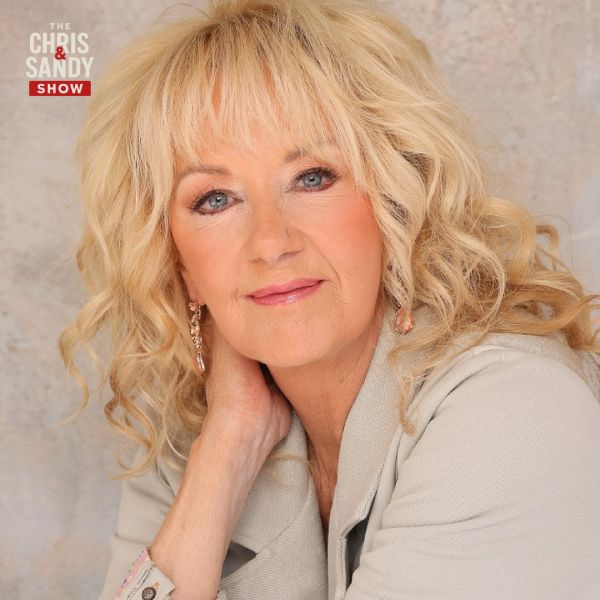
Bonnie Keen is a Dove Award-winning Christian recording artist, songwriter, speaker, author, and longtime voice in contemporary Christian music whose influence extends far beyond the stage. Best known as a member of the acclaimed trio First Call, she has spent decades using music to encourage faith, inspire hope, and point audiences toward Christ.
While her musical accomplishments are significant, Bonnie's greatest impact comes through her willingness to share the deeply personal story behind her career. Having survived severe childhood abuse, battled clinical depression, experienced divorce, navigated professional disappointment, and walked through seasons of profound healing, she speaks with a rare authenticity that resonates with people far beyond Christian music audiences.
Today, Bonnie continues recording music, writing, speaking, and advocating for persecuted Christians through her partnership with Christian Solidarity International. Her message centers on courage, forgiveness, generational healing, and using whatever influence God provides to serve others rather than ourselves.
Throughout this conversation on The Chris & Sandy Show, Bonnie demonstrates that true success is not measured by awards or recognition but by faithfulness, humility, and the willingness to transform personal pain into hope for future generations. Her life is a compelling testimony that broken beginnings do not have to determine someone's legacy.
Bonnie Keen: When Grace Becomes Stronger Than the Past
The Dove Award-winning artist reflects on childhood abuse, forgiveness, faith, courage, and why the deepest songs are often born from life's deepest wounds.
There are interviews that introduce you to someone's career.
Then there are conversations that introduce you to their heart.
This conversation with Bonnie Keen belongs firmly in the second category.
Known by many for her award-winning career in Christian music and her years with First Call, Bonnie could have easily spent the interview talking about albums, concerts, songwriting, or ministry accomplishments. Those topics certainly came up, especially her partnership with Christian Solidarity International and her desire to raise awareness for persecuted Christians around the world.
But what emerged instead was something far more lasting.
It became a conversation about surviving childhood abuse.
Breaking generational cycles.
Learning to forgive.
Finding God through music.
And discovering that scars can become places where hope quietly grows.
Music Was the First Place She Experienced Hope
Bonnie shared something that immediately reframed her entire story.
Long before audiences knew her voice, she was simply a frightened little girl growing up in an abusive home.
She described living in constant fear, developing migraines and physical illness as a child, and struggling to understand a God she had been taught to fear. Rather than finding comfort in her circumstances, she found it in something unexpected.
Music.
Listening to beautiful harmonies became one of the first moments where she sensed there might actually be a God who loved her.
That realization eventually became the foundation for everything that followed.
It is a reminder that God often reaches people through unexpected doors. For Bonnie, music wasn't simply a career path. It became one of the earliest expressions of hope she ever experienced.
Courage Isn't the Absence of Pain
Today Bonnie speaks openly about courage.
Not because life became easy.
But because she has lived through enough hardship to understand that courage is often born inside suffering rather than outside it.
That conviction explains why she now partners with Christian Solidarity International, using her voice to advocate for persecuted Christians around the world.
Rather than avoiding difficult subjects, she believes Christians should become more aware of them.
Her latest season of ministry reflects that change.
She described herself as entering "Act Three" of her life, a season where she no longer feels pressure to stay quiet about the burdens God has placed on her heart.
Whether discussing religious persecution, child trafficking, or the suffering of believers across the globe, Bonnie sees influence as stewardship rather than celebrity.
The larger the platform becomes, the greater the opportunity to point people toward truth.
Healing Doesn't Erase the Scars
Perhaps the most unforgettable part of the interview came when Bonnie reflected on her childhood.
She spoke honestly about severe abuse.
Clinical depression.
Divorce.
Years of healing.
And the daily practice of forgiveness.
What makes her story remarkable isn't that hardship disappeared.
It's that bitterness never became the final chapter.
Bonnie explained that although she doesn't know everything that shaped the parent who abused her, she chooses forgiveness anyway.
Not because the abuse was acceptable.
But because forgiveness keeps her own heart free.
That perspective reaches its emotional climax when she quietly says something that may become one of the defining quotes from The Chris & Sandy Show archive:
"The dysfunction in my family tree stopped on my watch."
Few sentences communicate personal responsibility, redemption, and hope more clearly than those nine words.
For Bonnie, healing wasn't simply about surviving her past.
It was about making sure the next generation experienced something different.
That may be one of the greatest definitions of redemption anyone can live.
Success Didn't Protect Her, It Revealed What Was Real
Like many people in entertainment, Bonnie experienced seasons where everything seemed to be moving in the right direction.
First Call had become one of Christian music's most respected groups. Opportunities were expanding. Record deals were growing larger. The future looked bright.
Then, almost overnight, everything changed.
A national scandal involving another member of the group brought unexpected consequences to everyone involved. Although Bonnie and fellow member Marty McCall had done nothing wrong, contracts disappeared, performances were canceled, and relationships they believed were genuine suddenly vanished.
It became one of the most revealing seasons of her career.
Success had introduced her to many people.
Failure showed her who would actually stay.
Rather than allowing that disappointment to make her cynical, Bonnie learned something far more valuable.
Success is temporary.
Character is not.
She also discovered that influence carries responsibility. If success ever comes, it should be viewed as a platform to serve rather than a pedestal to stand on.
That perspective feels especially refreshing in a culture that often measures worth by visibility.
The Hidden Cost Behind Every Performance
One of the strengths of The Chris & Sandy Show is its willingness to ask guests about the part audiences rarely see.
Bonnie's answer pulled back the curtain on life as a professional musician.
People see the applause.
They rarely see the airports.
The uncertainty.
The late-night travel.
The financial unpredictability.
The creative struggles.
Or the moments like sitting on the floor of an airport after midnight, crying because her purse, keys, identification, and credit cards had disappeared.
It wasn't glamorous.
It was simply real.
Yet even after describing those exhausting realities, Bonnie smiled and admitted she wouldn't trade this calling for anything else.
That may be one of the clearest signs someone has found their purpose.
When the work remains meaningful even after the applause fades.
Community Is One of God's Greatest Gifts
As the conversation neared its conclusion, Bonnie shifted attention away from herself.
Instead, she began naming the people who helped carry her through life.
Longtime friends.
Prayer partners.
Pastors.
Creative collaborators.
Publicists.
Former bandmates.
Small groups.
Women who had faithfully walked beside her for decades.
It became obvious that Bonnie doesn't view success as an individual achievement.
She sees it as something sustained by community.
One of the most beautiful images from the interview wasn't from a concert stage.
It was a simple dining room table.
Every week, a small group gathers.
They open Scripture.
They pray.
They share communion.
They carry each other's burdens.
In an age where many people feel increasingly isolated, that picture may be one of the most powerful testimonies of the entire interview.
Healing rarely happens alone.
Neither does longevity.
LESSONS WE LEARNED FROM BONNIE KEEN
Lesson 1
Breaking the Cycle Begins With One Decision
Perhaps the greatest contribution Bonnie Keen makes in this interview has nothing to do with music.
It has everything to do with legacy.
Many people inherit unhealthy patterns.
Some inherit addiction.
Others inherit fear.
Others inherit abuse, shame, anger, or emotional distance.
The tragedy is not what we inherit.
The tragedy is when we unknowingly pass it forward.
Bonnie openly shared that she grew up experiencing severe abuse. For many people, those experiences become lifelong chains that shape parenting, relationships, identity, and emotional health. Trauma often teaches us that unhealthy behavior is normal because it is all we have ever known.
Yet Bonnie chose another path.
Her statement that the dysfunction stopped with her is more than a memorable quote—it is a declaration of intentional healing.
That decision required forgiveness.
It required recognizing painful patterns.
It required allowing God's grace to reshape her understanding of love, family, and identity.
One healed generation has the potential to rewrite the story of every generation that follows.
Readers may never become musicians.
They may never stand on a stage.
But every person has opportunities to interrupt destructive patterns inside their own family.
Healing is rarely instant.
But someone has to become the generation where it begins.
Bonnie reminds us that it can begin with us.
Lesson 2
God Often Meets Us Through Unexpected Doors
Bonnie's earliest experience of hope didn't come through a sermon.
It didn't begin with a stage.
It didn't even begin with a complete understanding of Scripture.
It began through music.
Listening to beautiful harmonies awakened something inside a frightened little girl who had grown up believing more in fear than love.
That experience eventually opened her heart to God.
It's a beautiful reminder that God rarely limits Himself to one method of reaching people.
For one person, healing begins through music.
For another, through friendship.
For someone else, through counseling, nature, books, service, or unexpected conversations.
Sometimes we become so focused on where we expect God to appear that we overlook where He already is.
Bonnie's story encourages us to pay attention to the places that awaken hope.
Those moments may be invitations toward something much deeper than we first realize.
They may become the beginning of healing itself.
Lesson 3
Real Courage Is Often Quiet
When people hear the word courage, they often picture dramatic moments—a speech, a protest, or a heroic act in front of a crowd.
Bonnie offers a different picture.
She speaks about courage as something lived daily. It is forgiving someone who may never apologize. It is continuing to trust God after disappointment. It is choosing hope after depression. It is speaking truth even when it isn't the popular position. It is using whatever platform you have to advocate for people who have no platform at all.
Her partnership with Christian Solidarity International reflects that mindset. Rather than simply promoting music, she has chosen to lend her voice to persecuted Christians around the world, believing influence should serve a greater purpose than personal recognition.
Most acts of courage are never televised.
They happen in prayer rooms.
Hospital rooms.
Counseling offices.
Kitchen tables.
Private conversations.
Bonnie reminds us that courage is not measured by applause. It is measured by obedience.
The world often celebrates loud courage.
God frequently builds quiet courage first.
Lesson 4
Success Is a Poor Foundation for Identity
Bonnie's career included awards, respected peers, major tours, and significant opportunities.
Yet one unexpected scandal involving another member of First Call dramatically altered the trajectory of that season of her life.
Contracts disappeared.
Relationships changed.
Industry support faded.
People she assumed would remain close suddenly weren't there.
That experience revealed something many successful people eventually discover.
Success can introduce you to people.
It cannot guarantee they will stay.
When our identity becomes attached to applause, promotions, public recognition, or career momentum, disappointment becomes devastating because it feels like we are losing ourselves instead of simply losing an opportunity.
Bonnie's perspective is refreshing because she refuses to define herself by either the high seasons or the difficult ones.
Instead, she repeatedly points back to God's faithfulness.
Careers rise and fall.
Platforms grow and shrink.
Public attention comes and goes.
Character remains.
Purpose remains.
Faith remains.
Those are far stronger foundations than success could ever provide.
Lesson 5
Healing Is Not the Same as Forgetting
One of the most mature moments in the conversation comes when Bonnie talks about forgiveness.
She doesn't present forgiveness as a single emotional breakthrough.
She describes it as a daily act.
That distinction matters.
Many people believe forgiveness means pretending something never happened.
Others think forgiveness requires immediate emotional peace.
Bonnie offers another perspective.
Forgiveness is a decision we sometimes make over and over again.
She openly acknowledges that she doesn't know everything her abusive parent experienced before becoming a parent herself.
Rather than using that uncertainty to excuse the abuse, she allows it to cultivate compassion without minimizing the damage.
That balance is remarkably healthy.
Forgiveness does not erase accountability.
Healing does not erase memory.
Grace does not erase truth.
Instead, forgiveness refuses to allow yesterday's pain to become tomorrow's prison.
For many readers carrying wounds from childhood, relationships, or betrayal, this lesson may become one of the most personally meaningful parts of the interview.
Lesson 6
No One Builds a Meaningful Life Alone
Near the end of the conversation, Bonnie shifts attention away from herself and begins naming people.
Friends.
Prayer partners.
Pastors.
Creative collaborators.
Publicists.
Former bandmates.
Small-group members.
She speaks with genuine gratitude about the people who have helped carry her through difficult seasons.
It is easy to overlook this portion of the interview because it feels less dramatic than the stories of abuse or career challenges.
In reality, it may reveal one of the secrets behind Bonnie's longevity.
She intentionally built community.
She didn't wait until crisis struck to search for support.
She cultivated relationships long before she desperately needed them.
One of the most beautiful images she shares is a small prayer group that gathers each week around a dining room table.
No cameras.
No audience.
No performance.
Just Scripture.
Prayer.
Communion.
Friendship.
In an increasingly isolated world, that picture may be every bit as inspiring as anything that happens on stage.
Healthy lives are rarely built by isolated people.
They are built by connected people.
Lesson 7
Your Greatest Ministry May Be Your Story
Bonnie has written songs.
Recorded albums.
Performed around the world.
Won awards.
Yet some of the most impactful moments in this interview have nothing to do with any of those accomplishments.
They come from her willingness to tell the truth.
She talks honestly about abuse.
Depression.
Divorce.
Fear.
Loneliness.
Professional disappointment.
Forgiveness.
None of those experiences were part of the career she would have chosen.
Yet together they became part of the ministry God gave her.
People rarely connect with perfection.
They connect with authenticity.
They trust honesty.
They remember vulnerability.
Bonnie demonstrates that our greatest influence often comes not from hiding our scars but from showing how God met us in them.
Our stories become bridges.
Someone listening today may never become a singer.
But they may find hope because Bonnie chose to tell the truth about her own life.
That is the remarkable power of testimony.
The Single Biggest Lesson From This Interview
If someone remembered only one lesson from this entire conversation five years from now, it should be this:
Healing becomes truly transformational when it changes not only your life but the lives of those who come after you.
Bonnie's statement that the dysfunction in her family tree stopped with her captures the heart of redemption. It shifts healing from being merely personal to becoming generational.
Many people spend years asking, "Why did this happen to me?"
Eventually, another question becomes even more important:
"What will happen because of me?"
That is where Bonnie's story becomes extraordinary.
She did not allow abuse to determine how she would love her own children.
She did not allow betrayal to make her bitter.
She did not allow disappointment to silence her calling.
Instead, she allowed grace to interrupt the cycle.
That is a lesson with enduring value whether someone is raising children, leading a business, serving in ministry, or simply trying to become a healthier person than yesterday.