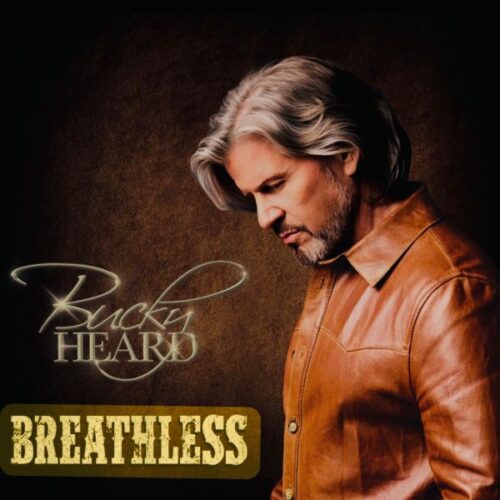
Bucky Heard is an American vocalist, performer, recording artist, actor, and inspirational entertainer known for his powerful voice, dynamic stage presence, and uplifting message of hope. Best known for becoming Bill Medley's partner in the legendary Righteous Brothers, Heard has spent decades building a career rooted in authenticity, perseverance, and connection.
A native of Alabama and a graduate of Auburn University with a Bachelor of Fine Arts in Theatre Performance, Heard's career spans theater, cruise ship entertainment, Branson stages, Las Vegas showrooms, and concert venues across America.
Beyond the music, Heard is recognized for his commitment to encouraging audiences, promoting kindness, inspiring perseverance, and helping people believe that their best days may still be ahead of them.
Bucky Heard: Why Your Best Days May Still Be Ahead of You
Most people know Bucky Heard as the powerhouse vocalist who stepped into one of music's most iconic legacies when he joined Bill Medley in the revival of The Righteous Brothers.
But that story only scratches the surface.
The real story is not about becoming a Righteous Brother.
The real story is about becoming the person capable of stepping into that role.
Because long before standing on stages in Las Vegas, sharing songs with legendary performers, and earning the respect of music royalty, Bucky Heard was simply a kid from a small Alabama town who loved music and dreamed about possibilities most people around him couldn't see.
And like many dreamers, he almost walked away from the thing he was born to do.
The Dream That Wouldn't Leave Him Alone
Looking back, Heard believes the signs were always there.
Growing up in Dadeville, Alabama, he sang in church and entertained classmates long before he ever considered music as a profession.
Years later, while unpacking old belongings, he discovered a second-grade report card.
On the back, his teacher had written a note about how much she enjoyed watching him sing and entertain during Show and Tell.
It was a simple observation.
But it revealed something important.
Even as a child, he was already doing what he would spend the rest of his life doing.
The problem wasn't discovering his passion.
The challenge was believing it could become a life.
His family included doctors and preachers.
Entertainment wasn't part of the family legacy.
His father was a respected small-town physician.
While his parents were supportive, Heard struggled with the belief that pursuing entertainment might somehow disappoint the people he respected most.
So he followed a more traditional path.
He enrolled at Auburn University and pursued a geology degree.
It seemed practical.
Responsible.
Safe.
Yet the dream refused to stay quiet.
When Safety No Longer Feels Safe
Everything changed when he began performing with a local band while attending college.
Something happened every time he stepped on stage.
Something that could not be duplicated in a classroom.
The feeling of being where he belonged.
Eventually, the pull became too strong.
Against conventional wisdom and much to the concern of his parents, he left school and hit the road with a band.
The decision didn't immediately produce success.
The band eventually dissolved.
He returned home humbled.
Many people would have viewed the experience as proof that the dream wasn't realistic.
Instead, Heard viewed it differently.
Sleeping six people to a room.
Playing rough venues.
Living the uncertainty of life on the road.
If anything, the difficulties clarified the truth.
He still wanted it.
If the hardship couldn't extinguish the dream, then maybe the dream was real.
That realization changed everything.
He transferred his academic credits and earned a degree in theater performance, opening new doors while continuing to pursue music.
It wasn't the easy road.
But it was finally his road.
The Years Nobody Sees
One of the most valuable moments in the interview comes when Heard talks about the reality behind success.
People see the finished product.
They see the spotlight.
The applause.
The recognition.
What they don't see are the years of preparation.
The years of uncertainty.
The years of wondering whether it will ever happen.
When he arrived in Branson, Missouri, he expected opportunities.
Instead, he encountered resistance.
His voice was unique.
Different.
Unconventional.
Potential employers questioned whether it would hold up.
For nearly three years he struggled to find meaningful singing work.
Three years.
During that period, he accepted whatever opportunities he could find.
He performed in roles that weren't part of the original dream.
He adapted.
Learned.
Stayed in motion.
Most importantly, he stayed.
That decision changed his life.
Because the opportunities that eventually appeared would never have existed had he left too soon.
It's a lesson many people need to hear.
The timeline rarely matches the vision.
Success often arrives long after most people would have quit.
The Gift of Persistence
One of the recurring themes throughout the conversation is Heard's refusal to surrender to discouragement.
He openly admits there were moments when watching others succeed was painful.
Moments when doubt appeared.
Moments when he questioned himself.
Those moments are universal.
Almost everyone pursuing something meaningful experiences them.
The difference is that Heard learned not to make permanent decisions based on temporary emotions.
Instead of quitting, he kept moving.
A little at a time.
One day.
One opportunity.
One performance.
One lesson.
One improvement.
That mindset eventually led him to opportunities he never could have predicted.
Years later he was sharing stages with legends.
Performing alongside artists he admired.
Learning from icons whose records he had once played in his bedroom.
The dream that once felt impossible gradually became reality.
Not because it happened quickly.
Because he stayed long enough for it to happen.
The Lesson Bill Medley Taught Him
Many people would assume the greatest lesson from working with Bill Medley involved music.
It wasn't.
It was authenticity.
According to Heard, Medley taught him something that transformed the way he performs.
The audience can smell insincerity.
You cannot fake connection.
You cannot manufacture authenticity.
People know when you're performing at them versus speaking with them.
The lesson emerged during a rehearsal.
Heard was delivering a spoken section of a song.
Medley stopped him.
Then asked a simple question.
"Would you talk to your wife that way?"
The answer was no.
The performance sounded polished.
But it didn't sound real.
That moment changed everything.
Instead of performing for audiences, Heard learned to speak to them.
Instead of trying to impress people, he focused on connecting with them.
Instead of creating distance, he created conversation.
The result was transformative.
Not only for his performances.
For his understanding of people.
Connection happens when authenticity replaces performance.
That lesson extends far beyond music.
It applies to leadership.
Parenting.
Friendships.
Marriage.
Business.
People respond to real.
Always have.
Always will.
A Mission Bigger Than Music
Perhaps the most revealing part of the conversation is that Heard doesn't really talk about music as much as he talks about people.
Again and again, he returns to the same idea.
Hope.
Encouragement.
Belief.
Kindness.
Compassion.
His goal is simple.
He wants people to leave feeling better than when they arrived.
Not because life is easy.
Not because hardship disappears.
But because perspective changes everything.
His album Breathless was intentionally built around that philosophy.
Each song contributes to a larger message.
Your dreams are not over.
Your future is not finished.
Your best days may still be ahead.
In a culture increasingly driven by outrage, division, and negativity, that message feels almost revolutionary.
Not because it's complicated.
Because it's simple.
And because simplicity often requires courage.
Faith That Shows Up Through Action
Another powerful thread running beneath the conversation is faith.
Heard references personal tragedy.
Loss.
Hardship.
Moments that tested him.
Rather than presenting faith as a slogan, he describes it as the foundation that carried him through difficult seasons.
One of the most powerful moments occurs when he explains that faith is not primarily about what people say.
It's about how they live.
People notice consistency.
People notice kindness.
People notice peace.
People notice resilience.
The goal isn't simply to talk about beliefs.
It's to live them.
For Heard, music becomes one expression of that philosophy.
Not preaching.
Not lecturing.
Simply creating experiences that encourage people to believe again.
The Real Legacy
Near the end of the interview, Heard is asked what he hopes he never forgets if he achieves even greater success.
His answer reveals everything.
The people.
The friends who stayed.
The supporters who believed.
The mentors who invested.
The family members who encouraged him.
The people who stood beside him during discouragement and loss.
Because ultimately, success means very little without gratitude.
And gratitude is woven throughout every part of his story.
THE 7 BIGGEST LIFE LESSONS FROM BUCKY HEARD
Lesson 1: Dreams Do Not Have Expiration Dates
One of the most powerful ideas repeated throughout this conversation is Bucky's belief that age should never become a reason to stop pursuing purpose.
Modern culture often creates invisible deadlines.
By a certain age, people think they should have already accomplished their dreams.
Started the business.
Written the book.
Recorded the album.
Built the career.
Found their purpose.
When those milestones don't happen on schedule, many people quietly place their dreams on a shelf.
Bucky challenges that thinking.
His message is simple:
Dust the dream off.
Pick it back up.
Start again.
Whether you're eighteen or eighty, the opportunity to create, grow, contribute, and pursue purpose still exists.
This perspective becomes even more powerful when you consider that Bucky launched his solo career after already establishing a successful career elsewhere.
Many people would have settled.
Many would have coasted.
Instead, he chose growth.
The lesson is bigger than music.
Life is not over because a chapter ended.
Life is not over because a timeline changed.
Life is not over because you got older.
As long as you're breathing, there is still potential ahead of you.
The question is whether you still believe it.
Lesson 2: The Difference Between Success and Regret Is Often One Decision
Throughout the interview, Bucky returns repeatedly to the idea of avoiding regret.
Not avoiding failure.
Avoiding regret.
Those are very different things.
Most people spend enormous energy trying to avoid failure.
The problem is that avoiding failure often means avoiding risk.
Avoiding growth.
Avoiding possibility.
Avoiding dreams.
Bucky understands that failure is survivable.
Regret is harder.
Failure teaches.
Regret lingers.
Failure can become wisdom.
Regret becomes wondering.
What if?
What could have happened?
Who could I have become?
The courage to pursue something meaningful doesn't guarantee success.
But it eliminates the lifelong burden of never trying.
That mindset is woven throughout Bucky's story.
Leaving college.
Going on the road.
Moving to Branson.
Continuing despite rejection.
Joining Bill Medley.
Launching a solo career.
Each step carried uncertainty.
But every step also reduced future regret.
Sometimes the most important victory is simply refusing to wonder what might have been.
Lesson 3: Persistence Often Matters More Than Talent
Many people assume successful entertainers reach their goals because of extraordinary talent.
Talent matters.
But persistence often matters more.
Bucky openly discusses arriving in Branson full of optimism and then spending nearly three years struggling to find meaningful singing work.
Three years of watching others advance.
Three years of questioning himself.
Three years of wondering when the breakthrough would come.
Most people never hear those stories.
They only see the later success.
What makes this lesson so powerful is that Bucky's breakthrough wasn't the result of one dramatic moment.
It was the result of staying.
Staying when it was hard.
Staying when it was discouraging.
Staying when progress was invisible.
The world often celebrates talent.
But life rewards endurance.
Many dreams die not because people lack ability.
They die because people leave too soon.
The lesson is clear:
Sometimes success belongs to the person who simply refuses to quit.
Lesson 4: Authenticity Creates Deeper Connections Than Perfection
One of the greatest lessons Bucky learned came from Bill Medley.
The audience can smell insincerity.
What a profound statement.
In an age dominated by branding, filters, image management, and performance, authenticity has become increasingly rare.
Yet people still crave it.
People connect with honesty.
People connect with vulnerability.
People connect with sincerity.
Bucky describes how a simple coaching moment transformed the way he communicates on stage.
Instead of trying to sound impressive, he learned to sound real.
Instead of performing at people, he learned to connect with people.
That lesson extends far beyond entertainment.
It applies to:
- Leadership
- Parenting
- Marriage
- Friendships
- Business
- Faith
People are not looking for perfect.
They are looking for genuine.
Authenticity builds trust.
Trust builds connection.
And connection changes lives.
Lesson 5: Success Is Never A Solo Achievement
One of the most beautiful parts of this conversation is Bucky's gratitude.
When asked about the people who helped him, he immediately begins naming mentors, teachers, coaches, family members, managers, producers, and friends.
Many successful people eventually become associated with individual achievement.
But the reality is that every success story contains countless people behind the scenes.
Teachers who encouraged.
Parents who believed.
Friends who stayed.
Mentors who guided.
People who opened doors.
People who spoke life into discouragement.
Bucky understands this.
He recognizes that none of us arrive alone.
That perspective creates humility.
It also creates gratitude.
The strongest leaders are rarely the ones who believe they did everything themselves.
They are the ones who never forget who helped them along the way.
Lesson 6: Faith Is Most Powerful When It Is Lived
Bucky's faith appears throughout the interview, but not in a way that feels forced.
Instead, it shows up through his perspective.
His resilience.
His gratitude.
His hope.
His compassion.
At one point he explains that people should see faith through the way we live.
That observation carries tremendous wisdom.
Many people can speak about values.
Living them is harder.
Kindness during disappointment.
Grace during conflict.
Faith during uncertainty.
Hope during hardship.
These moments reveal what people truly believe.
Bucky speaks about tragedy, loss, and difficult seasons.
Yet his outlook remains hopeful.
Not because life has been easy.
Because faith gave him something stronger than circumstances.
This lesson resonates beyond religion.
The deepest beliefs in our lives eventually reveal themselves through our actions.
What we repeatedly do matters more than what we repeatedly say.
Lesson 7: The Real Purpose Of Success Is Service
Perhaps the most important lesson from the entire conversation is that Bucky views success differently than many people do.
For him, success is not about fame.
Not about applause.
Not about recognition.
Not about status.
Success is about influence.
Specifically, how influence can be used to help people.
Again and again, he talks about encouraging others.
Giving hope.
Making people feel better.
Helping people believe again.
Bringing kindness into a divided world.
Those goals reveal something important.
Purpose is always bigger than self.
The people who create the greatest impact are usually focused on contribution rather than attention.
They ask:
How can I help?
How can I encourage?
How can I serve?
How can I make things better?
Bucky's career reflects that mindset.
His music is simply the vehicle.
The mission is much larger.
The mission is people.
And that may be the greatest lesson of all.
Single Biggest Lesson From This Interview
The life you want is rarely built through giant breakthroughs. It is built through thousands of small decisions to keep believing, keep growing, keep showing up, and keep moving forward long after others would have quit.
Bucky Heard's story is proof that perseverance, authenticity, faith, and purpose can take you places talent
TOP 5 QUOTES
Quote #1
"Give life all you have and go to the grave empty."
Quote #2
"The audience can smell insincerity like blood in the water."
Quote #3
"You don't have to put on. You just have to be real."
Quote #4
"Somebody has to make it. Why not you?"
Quote #5
"I want to uplift people and encourage people. That's the true way to make a difference."