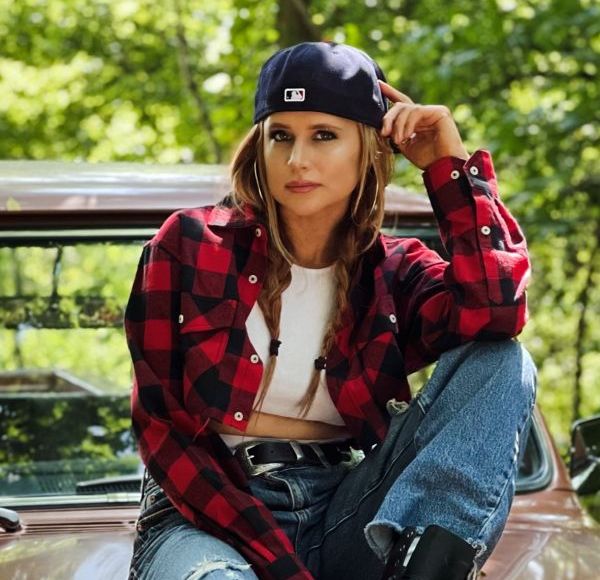
Coey Redd is an independent singer, songwriter, rapper, and producer whose music blends country storytelling with hip-hop rhythm, creating a sound that is both modern and deeply personal. Rather than following traditional genre boundaries, she has built her career around authenticity, combining honest songwriting with an energetic style that reflects her own experiences and creative vision.
Growing up with a love for music from an early age, Coey began writing songs as a child after believing the artists she admired wrote every song they performed. That curiosity eventually became a lifelong passion. Her journey took her from California to Nashville, where she chose an independent path instead of chasing the quickest record deal. She continues to write, record, perform, and invest in her own career while maintaining full creative control over her music.
What makes Coey's story especially compelling is her willingness to talk openly about the realities behind independent artistry. She discusses online criticism, financial sacrifice, emotional vulnerability, and the responsibility that comes with writing songs that truly connect with listeners. Through songs like "Cry Like a Man," she has demonstrated that music can do far more than entertain—it can create space for healing, honesty, and human connection.
Her appearance on The Chris & Sandy Show reveals an artist who is still building, still growing, and still choosing authenticity over popularity.
Coey Redd Is Building Her Own Lane, And Refusing to Apologize for It
The independent artist joined The Chris & Sandy Show to talk country, hip-hop, creative control, online criticism, and the powerful story behind “Cry Like a Man.”
There is something refreshing about an artist who is not trying to pretend the grind is glamorous.
On The Chris & Sandy Show, Coey Redd did not show up with a polished industry mask. She showed up as herself: a singer, songwriter, rapper, producer, and independent artist who is blending country heart with hip-hop cadence while building a career on her own terms.
She talked about upcoming music, the possibility of a debut album, the challenge of always wanting her next song to beat her last song, and the creative season she is currently living in. But what made this conversation matter was not simply what Coey is making. It was why she is making it, how she is surviving the process, and what her songs are doing in the lives of people who hear them.
This was not just a music interview.
It was a conversation about courage, independence, vulnerability, and the cost of being seen.
A Country Heart With Hip-Hop Cadence
Coey Redd’s sound lives in the space between worlds.
She is not traditional country in the narrowest sense. She is not simply a rapper stepping into a country lane either. Her identity as an artist is built from several pieces at once: country storytelling, hip-hop cadence, pop-sized hooks, songwriting instincts, and a willingness to bring her full personality into the music.
That blend has helped her stand out, but it has also made her a target for criticism.
In the interview, Coey talked about how people respond to her blending country and hip-hop. Some people love it. Some people do not know what to do with it. Some criticize how she dresses, how she presents herself, and how she fits into their idea of what country music should look like.
Her response is simple: she is going to be herself anyway.
That is one of the strongest threads in the conversation. Coey is not asking permission to fit into someone else’s category. She is building a lane that feels true to her. That does not mean the criticism is easy. It means she has decided authenticity is worth the cost.
She put it clearly when she talked about becoming comfortable with herself, loving what she is doing, and knowing that authenticity is enough. The right people will be drawn to what is real.
That is not just a music lesson. That is a life lesson.
The Hardest Part of Stepping Behind the Mic
Before becoming the face of her own songs, Coey spent years as a writer. Writing gives an artist a kind of shelter. You can put truth into songs without always being the person standing in front of the audience.
But stepping behind the mic changes everything.
When Chris asked what became harder when she moved from writing to performing, Coey opened up about the fear of putting herself out there online. The internet can be a scary place, especially when comment sections become part of the job.
Coey admitted something very human: she reads the comments.
She reads them because she is grateful. She wants the people who love her music to feel seen. She knows listeners have countless artists they could support, so when someone takes time to engage with her songs, she wants them to know it matters.
But that choice comes with a cost.
To read the beautiful comments, she also has to see the cruel ones. She has to absorb opinions from strangers. She has to navigate the emotional whiplash of being encouraged by one person and torn down by another.
That is one of the hidden tensions of modern artistry. Artists are expected to be visible, accessible, grateful, responsive, confident, and emotionally bulletproof all at the same time. Coey’s honesty reveals the truth: being seen is a blessing, but it is also a burden.
The lesson is not that criticism disappears. The lesson is that a person has to become rooted enough in who they are that criticism does not get the final vote.
The Song That Made a Soldier Feel Seen
The emotional center of the interview came through Coey’s song “Cry Like a Man.”
The song was inspired by a family story. Coey talked about her cousin Paul, his wife, and the emotional weight surrounding a serious medical situation. She described how Paul was the kind of man who had rarely been seen crying, but during a life-or-death health scare involving his wife, something opened up. Later, he cried again when their son was born.
That story became part of the emotional foundation for “Cry Like a Man.”
The song points toward a powerful truth: tears do not make someone weak. Sometimes they reveal the depth of someone’s love.
But the interview reached an even deeper level when Coey shared a message she received after teasing the song.
A man reached out to her privately. He told her he was an Army veteran who had served three tours in Afghanistan. He had a wife and two daughters. He said he sometimes sat in his car and cried because he felt emotions he did not know how to bring to anyone else. After hearing the snippet of “Cry Like a Man,” he sat in his car after the gym and cried for ten minutes.
That moment stayed with Coey.
She remembered calling her mother in tears because the message reminded her exactly why she does what she does. A song she wrote had reached someone in a private place of pain and helped him feel seen, even if only for a few minutes.
That is the power of storytelling.
Music can entertain. Music can trend. Music can build a platform. But sometimes music does something much more sacred: it gives language to the thing someone has been carrying alone.
The veteran’s message turned “Cry Like a Man” from a song into a moment of connection. It showed Coey that even on hard days, when criticism feels loud, her work is reaching people who need it.
The Truth Behind the Numbers
One of the most important parts of this conversation was Coey’s honesty about social media.
From the outside, followers and engagement can make people assume an artist is living comfortably. The numbers can create an illusion that success has fully arrived. But Coey did not feed that illusion.
She called social media “smoke and mirrors.”
That line matters because it speaks to something much bigger than music. Many people compare their real lives to someone else’s online appearance. They see numbers, photos, videos, comments, and assume they are looking at the full truth.
Coey made it clear that the truth is more complicated.
She is independent. She has no label and no publisher. She still works in a restaurant on weekends to pay her own living expenses. The money she makes from music gets reinvested back into her career. During the week, she is writing, doing sessions, filming content, giving interviews, playing shows, and keeping the machine moving.
That is the grind people do not see.
It is easy to admire the polished clip. It is harder to see the exhaustion behind it. It is easy to count the followers. It is harder to count the years without a vacation, the weekends spent working, the money reinvested, the songs rewritten, the meetings declined, and the quiet decision to keep believing.
Coey’s honesty makes this interview valuable for independent artists, creators, entrepreneurs, and anyone building something before the world fully understands it.
Creative Control Is Not a Luxury — It Is Part of the Vision
Coey has had opportunities to take meetings and consider deals. But she is not chasing any deal. She wants the right deal.
That distinction matters.
In the interview, she explained that she wants full creative control over what she is doing because she has a vision. She believes in herself, her fans, her authenticity, and the way she is building. She wants to be an example to someone else that it is possible to get it on your own.
That does not mean she is against opportunity. It means she understands that the wrong opportunity can cost more than it gives.
For artists, entrepreneurs, and creators, this is one of the most important lessons in the conversation. Sometimes the shortcut is not really a shortcut. Sometimes taking the wrong deal means handing over the very thing that made the work meaningful in the first place.
Coey’s independence is not just a business choice. It is a creative conviction.
She wants to earn her footing in Nashville. She wants people to remember seeing her when she was playing small rooms. She wants to pay her dues, not because she has to prove her worth to critics, but because she respects the place, the craft, and the artists who came before her.
That kind of humility matters.
In an industry that often rewards speed, Coey is choosing foundation.
Room at the Table
Another strong moment came when Coey talked about competition in the female country space.
She admitted that when she first came to Nashville, she imagined meeting other women making music, supporting each other, hanging out, writing songs, and rising together. Instead, she learned that the environment could be more competitive than she expected.
Her perspective was simple and powerful: there is room for everyone to eat at the table.
That statement captures a major leadership lesson.
Scarcity says someone else’s success threatens yours. Purpose says someone else’s success can exist beside yours. Coey understands that every artist has their own story, sound, aesthetic, and path. The fact that one person wins does not mean everyone else loses.
That mindset is part of what makes her story worth preserving in The Chris & Sandy Show archive.
Coey is not only talking about building a music career. She is talking about building it without becoming bitter, hardened, or fake. She acknowledges that entertainment can change people, harden them, and make them cynical. But she also believes a person can keep going without losing who they are.
That is the deeper story.
From Childhood Performances to a Life of Storytelling
Coey’s connection to music started early.
She remembered being a child with a boom box, performing outside and living fully inside the music. She talked about loving sounds, being drawn to Selena even though she did not fully understand Spanish, and growing up with the idea that if she wanted to be like the artists she admired, she needed to learn how to write songs.
That childhood instinct became a creative foundation.
Her biography adds that she grew up in Vacaville, was writing hooks for local rappers at 12 in exchange for studio time, moved to Los Angeles at 20 for The Music Institute, connected with industry veteran Suzan Koc, landed a co-publishing deal, and later built a major online following during the pandemic before releasing her debut single “Church” in 2022.
But the interview makes clear that the most important part of Coey’s story is not just the resume.
It is the consistency of the calling.
From childhood performances to songwriting sessions, from online criticism to restaurant shifts, from Nashville meetings to independent releases, Coey keeps returning to the same core idea: she loves the work, believes in the vision, and wants the music to mean something.
7 LESSONS WE LEARNED FROM THIS CONVERSATION
Lesson 1: Authenticity Will Cost You, But It Will Also Find Your People
One of the strongest themes throughout this conversation is that authenticity isn't always rewarded immediately. Sometimes it attracts criticism before it attracts community.
Coey openly discussed blending country music with hip-hop influences, dressing differently, refusing to fit into someone else's expectations, and reading countless opinions from strangers online. She knows not everyone understands what she's building, but she has reached the point where she realizes that isn't the goal. The goal is to create something that honestly reflects who she is.
That lesson extends far beyond music.
Every person eventually faces the temptation to become more acceptable instead of more authentic. We soften opinions. We hide gifts. We edit our personalities. We become what we think people expect us to be.
But authenticity has an interesting way of working.
It doesn't necessarily attract everyone.
It attracts the right people.
Coey explained that while criticism can be loud, the people who genuinely connect with her music remind her why she continues creating. Those connections are far more meaningful than universal approval because they are built on honesty instead of performance.
Perhaps the greatest freedom in life comes when we stop asking, "How can I make everyone like me?" and instead ask, "How can I become fully who I was created to be?"
Lesson 2: Success Is Often Much Less Glamorous Than It Looks
One of the most refreshing moments in this interview comes when Coey dismantles one of social media's biggest illusions.
Many people see followers, engagement, interviews, videos, and music releases and naturally assume an artist has "made it."
Coey says otherwise.
She explains that she still works restaurant shifts on weekends, reinvests every dollar possible back into her music, and spends nearly every weekday writing, filming, recording, performing, or creating content. Her career may look glamorous online, but behind every post is another long workday.
That honesty matters because comparison has become one of the defining struggles of modern life.
People compare their unfinished story to someone else's highlight reel.
They compare their behind-the-scenes to someone else's carefully edited success.
What Coey reminds us is that almost everyone you admire is carrying struggles you never see.
The entrepreneur you're jealous of may be working seventy-hour weeks.
The musician you envy may still be wondering how rent gets paid.
The content creator with millions of views may still battle anxiety every morning.
Real success rarely looks glamorous while you're living it.
Usually, it looks like showing up one more day.
Lesson 3: The Work That Changes Lives Usually Begins With Someone's Own Pain
The emotional centerpiece of this interview revolves around "Cry Like a Man."
The song began with a deeply personal family story. It eventually became something much larger after an Army veteran reached out to Coey explaining that hearing only a portion of the song allowed him to finally release emotions he had carried for years.
That's an incredible reminder that the deepest creative work almost always begins with honesty.
The songs that last.
The books that heal.
The speeches that inspire.
The conversations people remember.
Very rarely begin with someone trying to go viral.
Instead, they begin with someone willing to tell the truth.
The irony is that the more personal something becomes, the more universal it often becomes.
Because while our circumstances differ...
Our emotions often don't.
Fear.
Love.
Grief.
Hope.
Regret.
Joy.
Those are shared human experiences.
Coey's willingness to tell a personal story allowed thousands of listeners to recognize pieces of themselves inside her lyrics.
That is what meaningful art has always done.
Lesson 4: Independence Requires More Than Talent
Throughout the interview, Coey repeatedly returns to one theme:
Creative control.
She explains that she has turned down opportunities because she wants the right opportunity—not simply the fastest opportunity. She wants to maintain ownership over her vision and become proof that someone can build something independently.
Many people admire independence.
Few understand what it costs.
Independence requires discipline.
Patience.
Financial sacrifice.
Delayed gratification.
Confidence without constant validation.
It means betting on yourself before anyone else does.
That's true in music.
It's true in business.
It's true in ministry.
It's true in entrepreneurship.
It's true for authors.
It's true for speakers.
Anyone who builds something meaningful eventually reaches moments where shortcuts appear.
The temptation isn't always failure.
Sometimes it's success that asks you to compromise.
Coey's story reminds us that saying "no" to the wrong opportunity often creates room for the right one.
Lesson 5: Vulnerability Is Not Weakness—It's Leadership
Society has spent generations teaching people—especially men—that strength means emotional silence.
Don't cry.
Don't struggle.
Don't admit fear.
Don't let people see weakness.
"Cry Like a Man" quietly challenges that belief.
The veteran's message demonstrates how desperately many people are searching for permission simply to feel.
The irony is that many of the strongest people carry the heaviest emotional burdens because they believe strength means carrying them alone.
Real leadership doesn't come from pretending life is easy.
It comes from demonstrating that honesty and strength can exist together.
Some of the greatest leaders in history have also been people who openly admitted fear, grief, uncertainty, or failure.
Authenticity creates trust.
Perfection creates distance.
Coey's willingness to write about difficult emotions may ultimately help far more people than another catchy radio single ever could.
That is the power of vulnerable leadership.
Lesson 6: Your Childhood Clues Often Point Toward Your Calling
One of the most joyful sections of this interview comes when Coey remembers childhood.
She laughs about putting on performances in the backyard.
Singing into a boom box.
Listening to Selena.
Trying to imitate artists before she even understood the language.
Writing songs at eight years old because she assumed every artist wrote their own music.
Those stories aren't simply nostalgic.
They're revealing.
Many adults spend years trying to discover their purpose.
Often the clues were visible before they reached middle school.
Children naturally move toward what fascinates them.
Performance.
Building.
Drawing.
Teaching.
Helping.
Music.
Writing.
Design.
Speaking.
Problem-solving.
Somewhere along the way responsibilities, expectations, fear, and practicality often bury those gifts.
Coey's story reminds us that purpose isn't always something we discover later.
Sometimes it's something we remember.
Lesson 7: Never Let The Noise Become Louder Than The Mission
Perhaps the biggest challenge facing every creator today is learning which voices deserve attention.
Critics speak loudly.
Algorithms constantly change.
Opinions multiply.
Comparison never stops.
Coey admits she reads comments because she genuinely appreciates the people who support her. But she has also learned that if she allows criticism to become louder than purpose, she'll eventually lose sight of why she started.
That lesson reaches every area of life.
Businesses receive bad reviews.
Churches face criticism.
Teachers get complaints.
Parents are second-guessed.
Authors receive one-star reviews.
Entrepreneurs hear people explain why their idea won't work.
If every negative opinion becomes the loudest voice in the room, very little meaningful work will ever get finished.
Mission has to speak louder than noise.
Purpose has to become stronger than popularity.
And conviction must eventually outweigh approval.
That doesn't happen overnight.
It happens one decision at a time.
The Single Biggest Lesson From This Interview
If someone remembers only one lesson from this conversation five years from now, it should be this:
The people you're called to reach matter far more than the people who misunderstand you.
That truth appears repeatedly throughout Coey's story.
She talks about criticism.
About comments.
About blending genres.
About refusing to fit expectations.
About remaining independent.
Then she tells the story of one Army veteran whose life was touched by a single song.
Suddenly everything becomes clear.
The critics may be numerous.
But they are not the reason she creates.
The veteran is.
The listener who finally feels seen is.
The person driving home after a difficult day is.
The young songwriter wondering if authenticity is enough is.
Purpose almost never requires reaching everyone.
It requires faithfully reaching the people you were meant to reach.
That lesson applies equally to artists, parents, teachers, pastors, business owners, speakers, and leaders.
Influence has never been about numbers.
It has always been about people.