
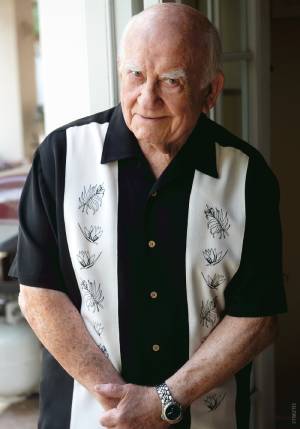
Few actors have left a larger mark on American television than Ed Asner, yet what made him truly remarkable extended far beyond awards and iconic performances. Best known for portraying the unforgettable Lou Grant on The Mary Tyler Moore Show and its acclaimed dramatic spin-off, Asner built a career defined by authenticity, versatility, and an unwavering commitment to his craft. Whether portraying dramatic figures, delivering memorable comedic performances, or bringing beloved animated characters to life through voice acting, he consistently connected with audiences through honesty rather than celebrity.
During his conversation on The Chris & Sandy Show, Asner revealed the person behind the legendary career. He spoke candidly about growing up as the son of a hardworking junkman, discovering acting almost by accident, overcoming fear, embracing mistakes, and finding fulfillment in continuing to learn throughout life. Rather than defining success through awards or recognition, he measured it through curiosity and purpose—summarized perfectly in his simple yet profound statement that his greatest accomplishment was "staying interested."
His interview serves not only as a reflection on one extraordinary career but as a masterclass in humility, perseverance, gratitude, and lifelong growth. Even decades after becoming one of television's most recognizable faces, Ed Asner remained a student of life, proving that the greatest legacies are built through character as much as achievement.
Ed Asner: Staying Interested, Staying Humble, and Building a Legacy Beyond Awards
From the son of a junkman to one of television's greatest actors, Ed Asner reminds us that the most meaningful success isn't measured by awards—it's measured by purpose, perseverance, and never losing your curiosity.
There are interviews where celebrities recount awards, famous co-stars, and career milestones.
Then there are conversations like this one.
When Ed Asner joined The Chris & Sandy Show in November 2020, he certainly could have spent an hour reliving decades of television history. With eight Emmy Awards, countless iconic performances, and a career that spanned more than six decades, no one would have blamed him.
Instead, he chose to talk about his father.
He talked about fear.
He laughed about embarrassing mistakes.
He reflected on discovering acting almost by accident.
And when asked what he considered his greatest accomplishment, he didn't mention The Mary Tyler Moore Show, Lou Grant, Roots, Up, or Elf.
His answer was beautifully simple.
"Staying interested."
That single sentence may summarize not only his career but an entire philosophy for living.
Growing Up as the Son of a Junkman
Long before audiences knew him as Lou Grant or the voice of Carl Fredricksen, Ed Asner was simply the youngest of five children growing up in a hardworking family.
His father made a living in the junk business.
As a child, Ed admits he wasn't particularly proud of that fact.
Like many young people, he viewed his family's occupation through the eyes of social perception rather than sacrifice. There was embarrassment attached to the title "junkman."
Time changed that perspective.
Looking back decades later, Asner spoke with unmistakable admiration about what his father had accomplished.
His father wasn't simply collecting discarded items.
He was providing for five children.
He created opportunity from what others threw away.
More importantly, he modeled values that would remain with Ed for the rest of his life.
One lesson echoed throughout the conversation:
"Waste not, want not."
Those words became more than financial advice.
They became a way of approaching life.
Don't waste opportunities.
Don't waste relationships.
Don't waste your gifts.
Don't waste the experiences—even the painful ones—that eventually shape who you become.
It's remarkable how often the most influential lessons in successful people's lives begin long before success ever arrives.
Discovering a Calling He Never Planned
Many actors describe knowing from childhood that they belonged on a stage.
That wasn't Ed Asner's story.
His path was far less predictable.
While in high school he participated in radio productions, but acting remained more of an enjoyable activity than a defined career path. It wasn't until college that everything changed.
A roommate encouraged him to audition for a campus production after hearing him read aloud. That recommendation led to a lead role in Murder in the Cathedral, and something unexpected happened.
He fell completely in love with theater.
What began as curiosity quickly became conviction.
There wasn't one dramatic lightning-bolt moment.
Instead, there was a gradual realization that acting was becoming impossible to ignore.
That theme appears repeatedly throughout this interview.
Purpose often reveals itself through participation rather than planning.
Many people spend years waiting to discover their calling before taking action.
Ed's story suggests the opposite.
Sometimes you discover your calling because you were willing to participate before you fully understood where it would lead.
Why Going "All In" Matters
One of the strongest conversations centered around commitment.
Chris shared advice previously given by another guest—that if someone could happily do anything besides their passion, they probably should.
Ed immediately recognized the truth behind that philosophy.
His own journey reflected exactly that mindset.
He worked factory jobs.
He served in the military.
He accepted opportunities wherever he could find them.
But underneath every temporary job was one constant goal.
Become an actor.
Not someday.
Eventually.
Or when conditions became perfect.
Simply continue moving toward the work he loved.
His advice was refreshingly uncomplicated.
"You've got to go all in."
Those words apply far beyond acting.
Whether someone hopes to build a business, write a book, launch a nonprofit, or create meaningful art, success almost always requires complete commitment.
Half-hearted effort rarely produces extraordinary outcomes.
Even Legends Live With Fear
Perhaps the most surprising revelation during the interview came when Ed admitted something many fans would never expect.
Comedy terrified him.
This is difficult to imagine considering the warmth, timing, and humor audiences associate with many of his performances.
Yet he openly confessed that making people laugh felt unpredictable.
Drama made sense.
Comedy felt dangerous.
What if the audience didn't laugh this time?
That uncertainty lingered even after years of experience.
Instead of hiding those fears, he embraced them as part of the creative process.
The honesty became even more apparent when he shared stories of mistakes throughout his career.
One of the funniest involved falling asleep backstage during a Broadway performance and completely missing his entrance.
Rather than pretending it never happened, he laughed while telling the story.
Moments like these remind us that mastery doesn't eliminate mistakes.
Experience simply teaches us how to recover from them.
For aspiring performers, that lesson may be more valuable than any acting technique.
Perfection isn't the goal.
Persistence is.
The Audition That Changed Television History
Every legendary career contains defining moments that seem obvious in hindsight.
At the time, however, they rarely feel historic.
Ed's audition for The Mary Tyler Moore Show was one of those moments.
Producer Grant Tinker had noticed his work and suggested he audition for the role of Lou Grant.
There was just one problem.
The producers weren't entirely sure he could do comedy.
Ed wasn't sure either.
During the audition, director and producer James L. Brooks challenged him to read the scene in a completely different way.
More outrageous.
More unpredictable.
More fearless.
Ed later admitted he wasn't even sure what he was doing.
He simply committed.
The room erupted with laughter.
When he returned to audition with Mary Tyler Moore herself, he repeated the performance.
Years later he learned that after he left the room, Mary questioned whether he was truly right for the role.
The producers' response has since become part of television history.
"That's your Lou Grant."
The rest is history.
It's a reminder that life-changing opportunities often arrive disguised as ordinary auditions.
You rarely know you're standing inside a defining moment until years later.
Curiosity Was His Greatest Achievement
As the conversation moved toward its conclusion, Chris asked what should have been a simple legacy question.
Instead, it produced perhaps the interview's most memorable answer.
"What would you say is your biggest accomplishment?"
Most listeners probably expected an answer involving awards, iconic roles, or career milestones.
Instead, Ed paused and answered:
"Staying interested."
It is difficult to imagine a better definition of lifelong success.
Awards eventually gather dust.
Records are broken.
New generations arrive.
But remaining curious...
Continuing to learn...
Continuing to create...
Continuing to approach each new script with excitement...
Those qualities sustain not only careers but meaningful lives.
In many ways, that answer explains how someone continues acting into their nineties with genuine enthusiasm.
The work never became routine.
It remained an adventure.
More Than a Legendary Actor
Throughout this interview, Ed Asner consistently redirected attention away from celebrity and toward character.
He spoke warmly about his parents.
He discussed his family's autism advocacy.
He celebrated lifelong learning.
He admitted failures without embarrassment.
He laughed at himself.
Those qualities reveal why so many people admired him beyond his performances.
His legacy isn't simply the remarkable characters he portrayed.
It's the example he set as someone who continued showing up—with humility, humor, gratitude, and curiosity—for decade after decade.
7 Lessons We Learned From Ed Asner
For more than six decades, Ed Asner entertained audiences through unforgettable performances in television, film, theater, and voice acting. But what made this conversation so compelling wasn't the list of accomplishments—it was the wisdom behind them.
His reflections reveal lessons that apply far beyond Hollywood. Whether you're building a business, raising a family, chasing a dream, or simply trying to live a meaningful life, these insights remain as relevant today as ever.
Lesson 1: Sometimes You Don't Find Your Calling—Your Calling Finds You
Many people spend years believing they need a perfectly mapped-out life plan before taking their first step. Ed Asner's story suggests something very different.
He didn't grow up convinced he would become an actor. While he enjoyed radio work in high school, acting wasn't a lifelong obsession. It wasn't until college—after encouragement from a roommate and an unexpected opportunity in a theater production—that something inside him awakened.
That realization is encouraging because it removes unnecessary pressure. You don't have to know your life's purpose at sixteen or eighteen. Sometimes purpose is discovered through participation rather than prediction.
Too often people wait for certainty before taking action. Ed's life reminds us that action often creates certainty. By simply saying yes to opportunities, he uncovered the work that would define the rest of his life.
Purpose isn't always announced with fireworks.
Sometimes it quietly introduces itself while you're simply trying something new.
Lesson 2: Gratitude Often Arrives Years After Understanding
One of the most touching moments in the interview came when Ed reflected on his father.
As a young boy, he wasn't proud that his father worked as a junkman. Like many children, he viewed his family's occupation through the lens of what other people thought. There was embarrassment attached to the title.
Only later did perspective replace pride.
As an adult, he no longer saw someone collecting discarded items. He saw a father who worked tirelessly to provide for five children, creating stability through honest labor and sacrifice.
That transformation in perspective is something many people experience. We often spend our younger years noticing what our parents lacked. As we grow older, we begin noticing everything they gave.
Maturity frequently changes our memories.
The older we become, the more we appreciate sacrifices we never noticed when they were happening.
Gratitude often doesn't come from receiving more.
It comes from finally seeing what was already there.
Lesson 3: Success Belongs to Those Willing to Go All In
Throughout the interview, Ed repeatedly emphasized commitment.
Before acting became his full-time profession, he worked factory jobs, served in the military, and accepted whatever work was available. Those jobs paid the bills, but they never replaced the larger dream.
When Chris shared another guest's advice about fully committing to your passion, Ed immediately agreed.
"You've got to go all in."
That statement carries weight because it came from someone who actually lived it. Great careers are rarely built through casual interest. They require persistence when progress feels slow, discipline when motivation fades, and faith when results aren't yet visible.
Going all in doesn't guarantee success.
But refusing to fully commit almost guarantees mediocrity.
Whether you're writing a book, launching a company, building a ministry, or pursuing the arts, wholehearted commitment remains one of the greatest competitive advantages anyone can possess.
Lesson 4: Fear Doesn't Disappear—You Simply Learn to Keep Going
Perhaps the interview's biggest surprise was hearing Ed admit that comedy frightened him.
This confession feels almost unbelievable considering how naturally audiences associated him with humor. Yet behind the scenes, he wrestled with the same questions countless performers face.
"What if they don't laugh this time?"
He also shared stories about forgotten entrances, stage mishaps, and embarrassing moments that could have shaken anyone's confidence.
The important detail wasn't that mistakes happened.
The important detail was that he kept showing up anyway.
Too many people mistake confidence for fearlessness.
Ed demonstrates something much healthier.
Confidence isn't the absence of fear.
It's developing enough trust in yourself to continue moving despite fear.
The people we admire most aren't fearless.
They're simply unwilling to let fear make their decisions.
Lesson 5: Curiosity May Be the Greatest Measure of Success
Late in the interview, Chris asked what many guests would consider an easy legacy question.
"What is your biggest accomplishment?"
An actor with eight Emmy Awards could have pointed to countless achievements.
Instead, Ed answered with remarkable simplicity.
"My biggest accomplishment?... Staying interested."
It's difficult to improve upon that definition of success.
Remaining curious means continuing to learn.
Continuing to grow.
Continuing to discover.
Continuing to care.
Many people stop growing long before they stop working. Their curiosity fades, and routine replaces wonder.
Ed's answer reminds us that real success isn't merely reaching the top of a mountain.
It's continuing to enjoy the climb.
People who stay curious rarely become stagnant because every experience becomes another opportunity to learn something new.
Lesson 6: Your Greatest Legacy Isn't Your Resume
Ed discussed some of the most recognizable productions in television history, but what lingered after the interview wasn't a list of famous titles.
It was the kind of man he appeared to be.
He spoke warmly about his parents.
He laughed at his mistakes.
He openly admitted fears.
He discussed his family's work supporting individuals with autism.
Those moments revealed something more important than professional achievement.
Character.
Awards tell people what you've accomplished.
Character tells people who you became while accomplishing it.
Years from now, very few people will remember the exact number of awards someone won.
They will remember how that person treated others.
How they carried themselves.
How they made people feel.
Legacy is built far more by character than credentials.
Lesson 7: Never Stop Showing Up
Perhaps the quietest lesson in the entire interview is also one of the most powerful.
Ed Asner never stopped working.
Into his nineties, he continued acting, performing, recording voice work, writing, advocating, and accepting new creative challenges.
He wasn't chasing relevance.
He simply loved the work.
That distinction matters.
When people are motivated solely by applause, retirement often follows fading attention.
But when someone genuinely loves what they do, there is little reason to stop.
Purpose becomes fuel.
His story challenges us to ask an important question.
What kind of life are we building?
One we hope to eventually escape...
Or one we hope we'll never have to leave?
The goal isn't simply reaching retirement.
The goal is creating a life meaningful enough that you continue contributing for as long as you're able.
The Single Biggest Lesson From This Interview
If there is one idea that rises above every other, it is this:
A meaningful life isn't built by chasing recognition. It's built by remaining curious enough to keep growing.
Ed Asner's career certainly deserves celebration, but his own definition of success tells us far more than his résumé ever could. Awards came and went. Famous roles became part of television history. Yet what brought him the greatest satisfaction wasn't any individual accomplishment.
It was that he never lost his desire to learn, create, and participate.
That mindset applies to every profession.
Parents who continue learning become better parents.
Leaders who remain curious become better leaders.
Artists who continue exploring become better creators.
People who stay interested continue becoming.
In a culture obsessed with milestones and achievements, Ed quietly reminds us that perhaps the greatest accomplishment is never allowing life to become ordinary.


