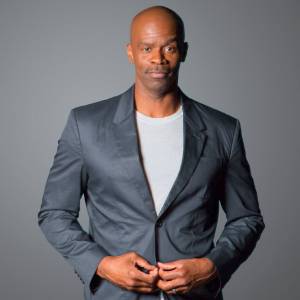
Michael Jr. is a comedian, author, actor and speaker whose work combines humor, storytelling and purpose-centered encouragement. His career has included appearances associated with The Tonight Show, Jimmy Kimmel Live and TEDx, as well as film projects including War Room, Selfie Dad, Laughing on Purpose and More Than Funny.
During this interview, he also discussed his book Funny How Life Works, which reflects his broader approach to helping people recognize meaning, purpose and growth within everyday experiences.
What distinguishes Michael Jr. is not simply that he makes people laugh. It is that he treats laughter as an opening through which people may better understand themselves and the lives they are building.
Michael Je: The Purpose Behind the Punchline
Comedian Michael Jr. explains why laughter is only the vehicle, how service reveals purpose, why hardship can expose what still needs healing and why success should never cost a family the presence it was meant to provide.
Michael Jr. has spent years making audiences laugh, but laughter is not the final destination of his work.
It is how he gets people through the door.
His comedy has taken him onto major stages, television programs, films and speaking platforms. He has developed the timing required to hold a room, the instincts to recognize an unexpected comic opening and the confidence to turn even an ordinary conversation into something memorable.
Yet when he joined Chris and Sandy Benton for a September 7, 2021 conversation on The Chris & Sandy Show, he did not describe comedy as the dream around which everything else revolved.
He described it as transportation.
“Comedy is the vehicle,” he said. “It is not the destination.”
That distinction became the foundation of a conversation that moved far beyond entertainment. It became an exploration of purpose, service, family, faith, hidden pain and the questions people ask when they are trying to understand what their lives are meant to contribute.
Michael Jr. did not offer a polished success formula. He offered something more valuable: a different way to look at the gifts people already possess.
When the Stage Stopped Being About Him
Early in his career, Michael Jr. approached the stage the way many performers do. He wanted to get a response.
The goal was to get laughs from people, and to get them quickly.
He remembered wanting an audience to laugh within the first several seconds of a performance. That response offered confirmation. It told him the material was working, the audience was with him and he was succeeding at the task in front of him.
Then his question changed.
Before walking onto a stage one night, he felt his mindset shift from trying to get laughs to giving people an opportunity to laugh.
The wording may appear subtle, but the posture behind it is completely different.
Getting requires something from the audience. Giving brings something to them.
When he walked onto the stage after that realization, he did not rush to force the first joke. He allowed several seconds to pass. Instead of tightening under the pressure to produce an immediate response, he relaxed.
His job was no longer to take laughter from the room. His job was to present a gift.
“When you have a gift for someone, as opposed to trying to take something from someone,” he explained, “your job is simply to present the gift.”
That realization also changed how he viewed the audience’s reaction. A gift can be prepared carefully, offered sincerely and presented at the proper moment, but the giver cannot completely control how another person receives it.
The applause, laughter or visible response was no longer the sole measure of whether he had done what he was supposed to do. Faithfulness was found in offering the gift rather than manipulating the reaction.
That principle travels far beyond comedy.
A teacher may enter a classroom trying to get students to prove that the lesson mattered. A speaker may need visible emotion to feel successful. A creator may judge the worth of an idea by how quickly people click, share or respond. A leader may confuse agreement with effectiveness.
Michael Jr.’s shift offers another way.
Prepare the gift. Present it well. Remain attentive to the people in front of you. Then release the need to control every response.
The irony is that loosening his grip on the audience’s reaction helped him connect more deeply with the audience itself. He could use comedy not only to create laughter but also to create openness. People arrived expecting jokes, and the laughter prepared them to receive truth.
That was when comedy became more than a career.
It became part of a calling.
The Question Beneath the Career
People are often encouraged to find their purpose by asking what they want to do.
The question appears logical. Young adults are asked what career they want. College students select a major. Creators choose a medium. Professionals consider which field will best match their strengths and interests.
Michael Jr. believes the question starts in the wrong place.
“What do I want to do?” centers the activity.
He argues that people should first ask, “Who do I want to serve?”
That question moves attention away from the mechanics of a job and toward the people waiting at the other end of it.
A person might say they want to become a mechanic because they enjoy taking vehicles apart, understanding how they work and solving technical problems. Those interests may be real, but enjoyment alone may not sustain a lifetime of work.
The deeper purpose emerges when the mechanic recognizes that repairing a vehicle helps someone get to work, pick up a child, care for a family member or reach a destination they could not otherwise reach.
The technical work remains the same, but its meaning changes.
Michael Jr. put it in one of the interview’s most memorable phrases: people can cause an alarm clock to go out of business.
When the work becomes connected to people, waking up is no longer driven only by personal enjoyment or obligation. Someone’s life may be affected by whether the person shows up.
This does not mean everyone must abandon the things they love or select a profession based entirely on sacrifice. It means talent reaches a deeper level of fulfillment when it becomes useful to someone beyond the person who possesses it.
A gift without direction can become a source of self-absorption.
A gift connected to service becomes a contribution.
That difference is central to Michael Jr.’s understanding of comedy. Audiences may come because they want to laugh, but he sees people at the other end of the performance. They may be carrying pressure, grief, confusion, family struggles or questions about their purpose. Laughter helps lower the emotional walls that might otherwise prevent them from hearing something meaningful.
He described the approach as catching people with comedy and keeping them with truth.
The joke attracts attention.
The purpose gives the moment weight.
What the Applause Could Not Show
A career looks different from the audience than it does from the road.
The public sees the stage, the television appearance, the film credit, the published book and the finished performance. The difficult years are often compressed into a few lines of biography after success has made them easier to tell.
Michael Jr.’s journey included a period when the distance between ambition and stability became painfully clear.
He moved to New York City with approximately $600, believing he could book comedy shows and use the income to support himself. He did find opportunities, but he discovered that many of those performances paid very little—around $12 each.
The dream may have brought him to New York, but the available income could not keep a roof over him.
Eventually, the vehicle he drove became the place where he lived.
Michael Jr. could now turn the memory into comedy. He referred to his car as his “four-door apartment” and joked that his address matched the model year of his Chevrolet Lumina because the Lumina was his address.
Behind the punchline was homelessness.
He survived on inexpensive food, including meatball subs, while trying to understand how to move to the next level of a career that appeared much more promising in imagination than it did from inside a parked car.
The humor makes the story easier to receive, but it should not make the hardship easier to dismiss.
He had entered one of the most difficult seasons of his professional life with limited money, uncertain prospects and no guarantee that the sacrifice would produce the outcome he wanted.
Years later, his children could read about that period and struggle to imagine their father living that way.
He was glad they could not understand it from experience.
Parents sometimes speak proudly about wanting their children to endure the same hardships that made them stronger. Michael Jr.’s response was more measured. He could recognize what the hardship taught him without wishing homelessness upon his children.
There is wisdom in that distinction.
Pain can produce growth, but pain does not need to be romanticized. A difficult season may become part of a meaningful story without becoming something people should intentionally recreate for those they love.
The experience gave Michael Jr. perspective on what success costs, but it also helped him recognize that not every cost should be accepted simply because it can be labeled sacrifice.
The Sacrifice a Family May Never Have Requested
The road did not only cost money.
It cost time.
Michael Jr. spoke honestly about traveling while he was a single father of three and not being as present as he would have liked. The demands of building a comedy career required him to leave, perform and return repeatedly.
That type of sacrifice is easy to justify.
A parent can tell themselves the travel is for the family. The work is necessary. The opportunity may not return. The money will create a better life. The sacrifice today will provide security tomorrow.
All of those statements may contain truth.
They can also silence the people supposedly being served.
Michael Jr. now asks his children whether he is traveling too much. He invites them to speak into the frequency of his absence instead of assuming he already knows what they want.
That practice challenges a common model of leadership in which one person makes a costly decision and expects everyone else to appreciate the sacrifice.
Parents may assume their children want a larger home, more possessions, greater opportunities or the lifestyle created by professional success.
The children may want the parent.
“Maybe one of the things they want is a parent that’s present,” Michael Jr. said.
The line is powerful because it does not accuse parents of caring too little. It exposes how love can be expressed without enough listening.
A parent may sacrifice deeply and sincerely while still sacrificing the wrong thing.
Michael Jr. connected the issue to the biblical principle that obedience is better than sacrifice. He would rather listen—to God, to his wife and to his children—than automatically assume that a larger sacrifice is a more honorable one.
That does not eliminate difficult decisions. Families will still face seasons that require long hours, travel, financial pressure and uncomfortable tradeoffs.
Communication does not remove the cost.
It makes the cost shared rather than imposed.
Michael Jr.’s approach recognizes that family leadership should include the voices of the people living with the consequences. Providing for them does not mean speaking for them in every circumstance.
Sometimes responsible ambition means working harder.
Sometimes it means turning down the opportunity.
Wisdom is found in knowing the difference.
The Places Where Life Still Rubs
The conversation eventually moved from external purpose to internal freedom.
Michael Jr. offered another memorable observation: life brings people and circumstances that reveal where a person is not free.
The frustrations that repeatedly trigger someone may not be random. The relationships that follow the same painful pattern may not be explained only by bad luck. The conflict that seems entirely caused by another person may be touching something unresolved within.
He used the example of someone who repeatedly enters relationships with the same type of unhealthy partner. The individual may leave one relationship only to find a similar person in the next.
Changing the person did not change the pattern.
The deeper work begins when the individual stops asking only what is wrong with the other person and begins asking what the relationship is revealing within themselves.
Perhaps the partner resembles an unresolved relationship with a parent. Perhaps an old wound never received closure. Perhaps an early experience formed expectations that now feel familiar, even when they are harmful.
Michael Jr. compared the process to a knot in wood being shaped by sandpaper.
The friction hurts, so people instinctively pull away. They avoid the conversation, end the relationship, reject the feedback or blame the external circumstance.
Yet pulling away from the sandpaper may preserve the very place that needs to be reshaped.
The lesson is not that people should remain in dangerous or abusive situations. It is that leaving a harmful environment and healing the internal wound are not always the same action.
A person can escape one circumstance while carrying the unresolved pattern into the next.
Real freedom requires the courage to press into the question: Why does this affect me this way?
The answer may be uncomfortable. It may expose grief, fear, rejection, shame or a belief formed years before the present conflict.
But awareness creates the possibility of change.
Life’s friction is not always proof that someone is on the wrong path. Sometimes it reveals the exact place where growth is still needed.
Jumping Before the Parachute Appears
Faith appears throughout Michael Jr.’s story less as a slogan than as a way of moving.
He admitted that he does not always perform extensive calculations when he believes God is directing him. He tries not to “do too much math.”
He jumps.
Then, in his humorous description, a man carrying a parachute jumps onto his back and the landing becomes softer than expected.
The image captures a tension familiar to anyone who has attempted something without complete certainty.
People often want the parachute secured before they leave the ground. They want the guarantee, the funding, the audience, the approval, the perfect timing and the complete explanation.
Sometimes those things come first.
Sometimes they do not.
Michael Jr.’s faith does not appear to be based on never experiencing difficulty. The man who lived in his car knows that obedience does not always produce immediate comfort.
Instead, faith means refusing to make certainty a requirement for every act of obedience.
That same willingness appears in the way he uses the stage.
He described moments when he felt prompted to say something unexpectedly serious in the middle of a comedy performance. The subject might appear disconnected from the jokes, yet afterward someone would approach and explain how closely the words matched a private struggle.
Michael Jr. could not have calculated that response because he did not know the person’s story beforehand.
He spoke, moved forward and trusted that the reason would become visible later.
This is not carelessness disguised as spirituality. It is responsiveness.
There is a difference between acting impulsively because a person dislikes preparation and moving faithfully after preparation can no longer provide the final answer.
Michael Jr. appears comfortable allowing that distinction to remain somewhat mysterious.
He prepares the gift.
He listens.
Then he presents it.
Talent Is Only the Seasoning
Near the close of the conversation, Chris asked what advice Michael Jr. would give a young actor, singer or entertainer preparing for the years ahead.
Michael Jr. returned to the same question that had shaped the rest of the interview.
Do not focus only on the “do.”
Focus on whom you are called to serve.
He compared acting and singing to seasoning added to the substance a person is meant to deliver.
Seasoning matters. It makes the meal more appealing, distinctive and memorable. In entertainment, craft matters. A performer should develop technique, timing, discipline and professional excellence.
But no one can live on seasoning alone.
Talent may attract the audience without giving them anything lasting once they arrive.
That warning is especially important in a culture that encourages people to turn their gifts into identities as early as possible. Young performers can begin believing they are valuable because they sing, act, dance, create or receive attention.
Then the opportunities slow down.
The applause moves elsewhere.
The person is left trying to understand who they are without the response that once confirmed them.
Michael Jr.’s philosophy creates a stronger foundation.
The gift is not the identity.
The profession is not the destination.
The stage is not the purpose.
Those things are tools that help a person deliver something to people.
When the tool changes, the calling can remain.
That is why Michael Jr.’s message reaches beyond comedy. A person can lose a job, transition careers, leave a stage or enter a new season without losing the deeper purpose that gave those activities meaning.
The vehicle may change.
The people one is called to serve can still be reached.
7 LESSONS WE LEARNED FROM MICHAEL JR.
Lesson 1
Your Gift Is Not the Destination
Michael Jr.’s clearest message is that talent should never be confused with purpose.
He is a comedian, but he does not view comedy as the final reason for his work. Comedy is the vehicle. It attracts people, creates connection and gives him a way to communicate ideas that might be more difficult to receive without laughter.
That distinction matters because people often build their entire identities around what they do. A musician becomes the music. A business owner becomes the company. A speaker becomes the stage. A creator becomes the audience response.
The danger appears when the vehicle slows down, changes direction or disappears.
A career can end. A platform can shrink. A business can close. An industry can change. A person who has confused the vehicle with the destination may feel that their entire purpose has been taken away.
Michael Jr.’s perspective offers a more stable foundation. The method may change while the mission remains.
A person who is called to encourage others may do that through comedy in one season and writing in another. Someone who serves families may do so through a business, nonprofit, classroom or private act of care. The outward role can evolve without eliminating the deeper reason beneath it.
This lesson asks every person to examine the thing they are building and consider a more important question:
Where is this vehicle supposed to take me, and whom is it supposed to help along the way?
Lesson 2
Better Questions Create Better Lives
People frequently search for better answers while continuing to ask the same questions.
Michael Jr. challenges one of the most common questions people use when making major life decisions: “What do I want to do?”
The question is not useless, but it begins with the self. It focuses on preference, activity and personal fulfillment.
Michael Jr. replaces it with, “Who do I want to serve?”
That change reorganizes the entire conversation.
The first question may lead someone to select a job based on enjoyment. The second helps them understand the human impact behind the work. The first identifies an activity. The second identifies a responsibility.
This principle applies far beyond choosing a career.
Someone asking, “Why does this always happen to me?” may discover less than someone asking, “What pattern might I be repeating?”
A leader asking, “How do I get people to follow me?” may receive a different answer from one asking, “How can I serve the people I lead?”
A creator asking, “How do I get more attention?” may build differently if the question becomes, “What does my audience genuinely need?”
Michael Jr. said that when people ask a different question, they receive a different answer. More importantly, they begin noticing different things.
A changed question alters what a person looks for.
The road may have been present all along, but the original question kept their eyes focused somewhere else.
Lesson 3
Fulfillment Is Found at the Other End of the Gift
Talent often begins as something personal.
A child discovers they can sing. Someone realizes they are good with numbers. Another person enjoys repairing things, writing stories, organizing people or making a room laugh.
Personal enjoyment can be the beginning of discovery, but Michael Jr. suggests that fulfillment becomes deeper when someone identifies the people at the other end of the skill.
His example of a mechanic makes the idea tangible.
A mechanic may enjoy understanding machines and repairing cars. Over time, the technical process may become repetitive. If the work remains only about personal fascination, motivation may eventually weaken.
The work takes on another level of meaning when the mechanic realizes that repairing a vehicle allows a parent to get to work, a family to travel safely or someone to reach an important destination.
The repair is no longer only a mechanical task.
It becomes service.
This is why Michael Jr. said that people can cause an alarm clock to go out of business. Knowing that someone needs what you contribute can create a reason to rise that is stronger than temporary enthusiasm.
Service does not guarantee that every day will feel exciting. It gives difficult days a context.
The most sustainable motivation is often not found in loving every part of the work. It is found in caring about the people who would be affected if the work were left undone.
Lesson 4
Stop Trying to Take a Response From People
Michael Jr.’s transformation as a performer began when he stopped trying to get laughs and started giving people an opportunity to laugh.
That shift changed more than his comedy.
It changed the emotional relationship between him and the audience.
When a person needs a specific response, the people in front of them can begin feeling like providers of validation. The performer needs laughter. The speaker needs applause. The creator needs attention. The leader needs agreement.
Even generous work can quietly become transactional.
Michael Jr. began thinking differently. He had a gift to present. His responsibility was to prepare it and offer it at the proper moment.
The response mattered, but it was no longer something he could force.
This lesson is especially valuable in an era when nearly every form of work can be measured publicly. Views, comments, likes, sales, attendance and engagement create immediate feedback. Those measures can help people improve, but they can also become emotional verdicts.
A person begins believing that low engagement means the gift has no value.
Michael Jr.’s approach separates obedience from reaction.
Present the gift with excellence. Learn from feedback. Remain attentive to the audience. But do not make another person’s immediate response the sole measure of whether the offering mattered.
Some gifts are understood later.
Some truths need time.
Some work reaches the person for whom it was intended without creating public evidence.
Faithfulness cannot always be measured by applause.
Lesson 5
Your Family Should Not Be Asked to Admire a Sacrifice They Never Chose
One of the interview’s most challenging lessons comes from Michael Jr.’s reflections on travel and fatherhood.
He had spent significant time away while building his career, including years when he was a single father of three. Like many working parents, he could have justified every absence by explaining that the sacrifice was for the family.
He eventually recognized that families should be allowed to speak into sacrifices made in their name.
A parent may believe children want a larger house, greater opportunities or more financial security. Those things can matter, but the children may value the presence of the parent more.
Michael Jr. now asks his children whether he is traveling too much.
That question requires humility because it opens the possibility that an opportunity celebrated professionally may be experienced differently at home.
Providing for a family is important. So is listening to the family being provided for.
This principle also applies to spouses and partners. A person may work relentlessly while believing the eventual reward will justify the current distance. Meanwhile, the relationship may be weakening under a plan no one fully discussed.
Sacrifice can become dangerous when it gives one person moral permission to ignore everyone else’s experience.
Communication does not mean the family will avoid every difficult season. Sometimes work will require absence. Financial realities may limit choices. Important opportunities may involve temporary costs.
The difference is that the family understands the decision, participates in the conversation and has permission to speak honestly.
Love should not only provide.
Love should listen.
Lesson 6
Not Every Sacrifice Is Obedience
Michael Jr. said he would rather be obedient than simply sacrifice.
That statement challenges a deeply rooted belief: that greater suffering always proves greater commitment.
People often admire those who work the longest hours, accept the greatest risk or surrender the most comfort. Sacrifice can become its own form of status.
Yet a person can sacrifice something that was never required.
A parent can miss years of family life to achieve a level of success the family did not request. A leader can damage their health while claiming the mission demanded it. A person can remain in an unhealthy situation because leaving feels like failure.
The size of a sacrifice does not automatically confirm the wisdom of the decision.
Obedience requires listening.
For Michael Jr., that includes listening to God and communicating with his wife and children. It means resisting the temptation to assume that the most painful path must be the most faithful one.
Some sacrifices are necessary. Others are avoidable. Some are acts of love. Others may be attempts to prove worth, earn approval or preserve an identity.
The important question is not merely, “What am I willing to give up?”
It is, “What is actually being asked of me?”
There are seasons when obedience will require enormous sacrifice.
There are also seasons when obedience may require rest, presence, saying no or abandoning an opportunity that looks impressive.
Wisdom knows that suffering and faithfulness are not always the same thing.
Lesson 7
Life’s Friction May Be Revealing Where You Are Not Free
People often interpret repeated conflict as evidence that the surrounding people or circumstances are always the problem.
Sometimes they are.
There are unhealthy relationships, harmful environments and situations that require clear boundaries or departure.
Michael Jr. adds another possibility: life may bring people and circumstances that reveal where an individual is still not free.
A person may repeatedly enter similar relationships. The names and faces change, but the emotional pattern remains. Someone may continue reacting intensely to the same type of criticism, rejection or conflict.
Leaving one situation can bring immediate relief without resolving what the situation exposed.
Michael Jr. compared the process to sandpaper working against a knot in wood. The friction hurts, and the instinct is to pull away. Yet the uncomfortable contact may be exposing an area that still needs healing.
This does not mean people should remain in abusive circumstances. It means that escape and healing are not always identical.
A person can leave the environment and still carry the wound.
Real growth begins when someone becomes willing to ask why the situation had such power over them.
Perhaps the reaction connects to an early experience of rejection. Perhaps a current relationship repeats dynamics from childhood. Perhaps the person has developed habits of fear, control or self-protection that once helped them survive but now prevent healthy connection.
The repeated friction may not be punishment.
It may be information.
Freedom requires more than changing the external cast of characters. It requires allowing the internal pattern to be seen, understood and healed.
THE SINGLE BIGGEST LESSON FROM THIS INTERVIEW
Purpose Becomes Clearer When the Gift Becomes About People
If someone remembered only one lesson from Michael Jr.’s conversation five years later, it should be this:
Purpose becomes clearer when people stop focusing only on what they want to do and begin identifying whom they are called to serve.
That lesson connects nearly every major part of the interview.
Comedy became meaningful when Michael Jr. stopped using the audience to get laughter and began offering laughter as a gift.
Career direction became clearer when the central question moved from activity to service.
Family decisions became healthier when the people affected by his travel were invited to speak.
Faith became practical when obedience mattered more than appearance or unnecessary sacrifice.
Even talent became more stable when acting, singing and comedy were understood as tools rather than complete identities.
The lesson does not suggest that personal interests are unimportant. Gifts, passions and abilities often provide clues about where a person can contribute most effectively.
But those clues remain incomplete until they are connected to people.
A gift answers the question, “What can I offer?”
Purpose answers, “Who might be helped by it?”
The most meaningful life is rarely built by staring only at the gift. It is built by looking beyond the gift toward the person waiting to receive it.