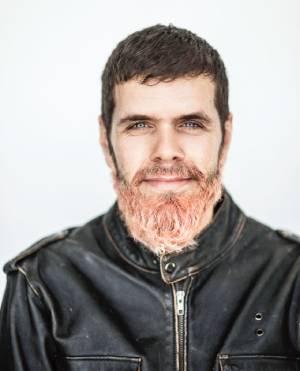
Perez Hilton is a media personality, entertainment commentator, author, podcaster, entrepreneur and one of the most recognizable figures from the early era of digital celebrity media.
Long before social media creators became a major part of the entertainment industry, Perez transformed a personal online hobby into a full-time media career. His work grew into a widely recognized entertainment brand that expanded across websites, television, books, podcasting, acting, live appearances and digital video.
Over the years, Perez has participated in memorable entertainment moments that included appearing on Glee, taking part in Britney Spears’ Circus tour, appearing in Rihanna’s “S&M” music video and serving as a judge for Miss Universe. He also released multiple books and built a long-running pop culture podcast with co-host Chris Booker.
Behind the public personality is a father of three and a family-oriented entrepreneur. Perez’s sister became an important part of his business operations, while his mother also helped support the responsibilities surrounding his work and home life.
During his December 15, 2021 interview with The Chris & Sandy Show, Perez moved beyond celebrity commentary to speak candidly about parenting during the pandemic, food addiction, unhealthy coping habits, relentless work, financial freedom and the sacrifices required to build and maintain success.
His story reflects both the possibilities of digital entrepreneurship and the private pressures that can remain after public recognition arrives.
Perez Hilton on Reinvention, Family and the Hidden Cost of Success
Behind one of digital entertainment’s most recognizable names is a father, entrepreneur and early internet pioneer still wrestling with work, health, financial freedom and the pressure of maintaining what he built.
For years, the name Perez Hilton has been associated with celebrity culture.
He became one of the internet’s most recognizable personalities during a time before TikTok creators, Instagram influencers and full-service digital talent agencies had transformed online attention into an established industry.
His career grew from a personal hobby into a multimedia brand. Along the way, he released books, created a podcast, appeared on television and stage, participated in major entertainment moments and built a business capable of employing members of his family.
From the outside, it may look like the kind of success that resolves uncertainty.
During a December 15, 2021 appearance on The Chris & Sandy Show, however, Perez offered a more complicated picture.
The conversation moved beyond celebrity headlines and career highlights into parenting, unhealthy coping habits, food addiction, family support, relentless work and the continuing desire for financial freedom.
What emerged was not a polished success story in which achievement fixed everything.
It was the story of a highly visible person who had built something extraordinary and was still learning how to carry it.
When the World Stopped Moving
The interview began with a question many entertainment professionals were being asked in 2021: How had the COVID-19 pandemic affected them?
Perez’s answer quickly moved beyond canceled projects and disrupted business.
He was raising three young children, and he believed children were among those whose lives had been most severely changed. Younger students could not necessarily adapt to remote learning with the same independence as teenagers.
Perez discovered that homeschooling was not one of his strengths.
He believed he could teach his children values, responsibility and lessons about life, but managing the academic side of their education required a different skill set.
That admission was a small but revealing parenting moment. Rather than presenting himself as capable of handling every demand, he acknowledged the difference between loving his children and being equipped to serve as their classroom teacher.
The deeper struggle, however, was happening inside him.
Perez described the feeling that the world was no longer moving forward. It felt as though he were inside a tunnel without a visible exit.
He had lived in New York City during the September 11 attacks and remembered finding some comfort in seeing life continue elsewhere in the country. The pandemic felt different. In 2020, the disruption was global, and there seemed to be no clear ending.
The uncertainty changed his behavior.
Perez described himself as someone who normally tried to live in a healthy way. During the pandemic, he began eating more, overeating and drinking far more frequently than usual.
He said he had previously consumed alcohol only once every few months. During the hardest period of isolation, that changed to drinking nearly every day.
At first, it felt casual. Eventually, he found himself asking why he was still doing it when it was no longer enjoyable.
Chris Benton understood the danger of that pattern from his own history of addiction and recovery. He noted how quickly a daily behavior can become a rut and how a rut can deepen into addiction when it is not interrupted.
Perez said alcohol and drugs had not historically been his main addictions.
Food was.
The Addiction You Cannot Completely Leave
Food addiction carries a unique complication.
A person can build a life without alcohol. Someone recovering from drug addiction can pursue complete abstinence. Food remains part of daily survival.
“You need to eat to live,” Perez explained.
That means recovery does not involve eliminating food. It requires developing a healthier relationship with something that remains constantly present.
Perez understood the difference between enjoying food and using it in a way that had moved beyond hunger. The problem came when he was eating from boredom, eating simply for the sake of eating or continuing far beyond what his body needed.
He also understood what often followed: guilt.
Yet guilt was not what interested him most.
“I don’t care about guilt,” he said. “I care about getting back on track.”
That may be the most important statement in the entire interview.
Many people imagine that shame will produce discipline. They punish themselves mentally after a setback because they believe feeling worse will somehow help them improve.
Often, shame has the opposite effect.
A person misses several workouts, breaks a diet, returns to an addictive behavior or abandons a personal routine. Instead of treating the mistake as an interruption, they begin treating it as proof that they cannot change.
Perez’s perspective was more practical. The setback had already happened. The urgent question was not how much guilt he could carry. The question was how to return.
He did not pretend that returning was easy.
After several days or weeks of unhealthy behavior, rebuilding a routine could feel extremely difficult. That difficulty did not erase the need to begin again.
The lesson reaches far beyond food.
Getting back on track matters in recovery, relationships, finances, faith, health, creativity and business. The past cannot be changed through guilt. The future can still be influenced through the next decision.
A Hobby Before the Influencer Economy
Perez’s career began before the modern creator industry had established its language, systems or expectations.
There were no short-form-video algorithms promising instant exposure. Personal brands were not routinely signing with influencer agencies. Businesses had not yet built entire marketing strategies around digital creators.
Perez began with a hobby.
That hobby gradually became a full-time media operation capable of supporting and employing members of his family.
His journey is significant not only because he became famous but because he recognized the power of personality-driven internet media during its earliest years.
By the time of the interview, his career had included experiences that extended far beyond celebrity blogging. He had appeared on Glee, participated in Britney Spears’ Circus tour, appeared in Rihanna’s “S&M” music video, judged Miss Universe, written four books, acted across different formats and built a long-running podcast.
He described roughly 17 years filled with experiences beyond what he once could have imagined.
Yet when asked what mattered most going forward, Perez did not say more fame.
He wanted greater financial freedom.
His answer was blunt: money mattered more than fame.
On the surface, that statement could be dismissed as materialistic. His explanation revealed something more thoughtful.
Perez wanted the ability to make choices without constantly considering what he needed to do, what he should do or what financial necessity required him to do.
He wondered how differently he might live if money no longer influenced those decisions.
That distinction matters.
Fame creates recognition. It may create access, attention and opportunities. It does not automatically create peace, security or the ability to say no.
Public visibility can even create new expenses and responsibilities. A recognizable career must be maintained. Employees and family members may depend upon the business. Audiences expect a constant flow of content. Relevance can feel temporary.
The person who looks completely free from the outside may still be making daily choices under pressure.
The Work Did Not End When Success Arrived
When Chris asked about the grind hidden behind the public glory, Perez gave one of the interview’s most provocative answers.
He believed that 98 or 99 percent of people would not be willing to work as hard as he worked.
His career had required what he called an “unhealthy work ethic.”
During the pursuit of success, work often had to become the highest priority. Other areas of life moved behind it.
Perez did not speak as someone remembering a difficult season that had completely ended. He said he was still making sacrifices to maintain what he had built.
He still did not sleep enough. He was still less social with friends than he would have preferred.
That distinction between achieving success and maintaining it is one of the interview’s most underrated insights.
People often imagine success as a finish line. They expect that once the audience arrives, the business becomes profitable or the opportunity finally appears, the hardest part will be over.
But achievement creates responsibility.
A platform must continue producing. A business must continue earning. An audience must continue receiving value. A reputation must continue being protected. A career built in a fast-changing industry must continue adapting.
The same drive that creates success may become necessary to sustain it.
That does not mean the cost is always healthy or unavoidable. Perez’s wording should invite reflection rather than become a universal prescription.
Does extraordinary success always require an unhealthy season?
Could the same career have been built with more sleep, more balance or greater support?
Was the sacrifice necessary, or was it simply the only path Perez could see at the time?
The interview did not fully answer those questions, but it raised them.
Perez eventually returned to a simpler formula.
Consistency and hard work mattered.
There was no single celebrity moment, television appearance or powerful connection that replaced the years of showing up. The glamorous experiences may have become part of the story, but the foundation remained repetitive effort performed when no audience could see the full cost.
The Family Behind the Name
Perez’s public brand carries his name, but the work behind it was not entirely solitary.
His sister served as his chief operating officer and handled much of the business side of the company. Perez admitted that technology was not always his greatest strength, making her role especially important.
His mother also worked for him.
He jokingly described her as his “professional mother,” but the responsibilities she carried were practical and meaningful. She collected mail, handled errands and researched people to repair problems at his home.
Those tasks may sound ordinary, yet ordinary tasks consume time. By trusting his mother and sister with responsibilities behind the scenes, Perez preserved more energy for the work only he could perform.
The arrangement also involved risk.
Working with family can blur the boundaries between personal relationships and business decisions. Perez remembered wondering whether he and his sister would fight constantly or damage their relationship.
Instead, the partnership endured.
They had been working together since 2007.
Perez’s willingness to employ and rely upon his family connects back to the beginning of his story. His parents were immigrants who came to the United States with little and taught him the importance of education and work.
He believed he had not received handouts or ridden his parents’ coattails. He built his career through his own effort, but the values underneath that effort were inherited.
His parents had given him something more durable than a ready-made business: a belief in responsibility.
Supporting Children Without Removing the Struggle
That belief shaped how Perez thought about raising his own children.
He intended to support them through college. He would help them with transportation and potentially cover a limited period of rent as they moved into adulthood.
But he did not want his success to become an excuse for their inactivity.
He expected them to find work, form plans and build independence. He was willing to encourage their dreams, including careers in entertainment, but he did not want to build those careers for them.
They could pursue what they loved.
They could not be lazy.
His philosophy sits inside a parenting debate many successful people face: How do parents use what they have built to help their children without taking away the very struggle that developed their own discipline?
Too little support can leave young adults overwhelmed by costs and disadvantages they did not create. Too much support can delay responsibility and weaken confidence.
Perez’s answer attempted to occupy the middle.
Provide education. Offer a temporary bridge. Encourage the dream. Expect effort.
His children would not begin with exactly the same circumstances he had experienced. He also did not want them to believe his career exempted them from creating something of their own.
Disagreement Without Disrespect
Perez had also built a long-running pop culture podcast with co-host Chris Booker.
The format differed from The Chris & Sandy Show because Perez did not want to depend on interviews.
Guests could cancel, arrive late, reschedule or complicate the recording process. He preferred a format that remained predictable and enjoyable.
Fun mattered.
Perez believed the audience could recognize whether the people behind a show were enjoying themselves.
His chemistry with Booker came not from constant agreement but from contrast. They came from different backgrounds and frequently held opposing views.
Yet they genuinely respected and cared about each other.
That combination made the disagreements entertaining without requiring personal hostility.
The lesson reaches beyond podcasting.
Modern culture often treats disagreement as evidence that a relationship is unsafe or impossible. Perez and Booker demonstrated that compelling conversation can emerge when people see the world differently but refuse to strip each other of dignity.
Shared opinions are not the only foundation for connection.
Respect can be stronger.
A Public Figure Still Becoming
The Perez Hilton who appeared on The Chris & Sandy Show was not asking the audience to believe he had resolved every contradiction in his life.
He was proud of what he had created.
He was grateful for experiences beyond his earliest dreams.
He loved his children, trusted his family and understood the unusual place he occupied in digital media history.
He was also tired.
He still wanted more financial security. He continued struggling with food. He knew his work habits came with a price. He had moved through a period in which his healthier routines gave way to overeating and frequent drinking.
Those truths do not erase his success.
They make the story more complete.
Public narratives often force people into simple categories. Someone is successful or struggling. Healthy or addicted. Ambitious or family-oriented. Grateful or dissatisfied.
Real people carry several truths at once.
Perez could be grateful for his career and still want more freedom.
He could love his children and admit he was not built for homeschooling.
He could recognize food addiction and still struggle to regain control.
He could value family while demanding independence from his children.
He could be one of the internet’s original influencers and still be working intensely to preserve the career he created.
7 LESSONS WE LEARNED FROM PEREZ HILTON
Lesson 1: Getting Back on Track Matters More Than Punishing Yourself
One of the most honest parts of the conversation came when Perez Hilton discussed his relationship with food.
During the most difficult period of the pandemic, he found himself overeating, eating from boredom and drinking much more frequently than he normally would. What may have begun as a temporary response to uncertainty gradually became a pattern he no longer enjoyed.
Perez understood the guilt that can follow a setback, but guilt was not where he wanted to remain.
“I don’t care about guilt,” he said. “I care about getting back on track.”
That distinction is powerful.
Guilt looks backward. It repeatedly asks why the mistake happened and how someone could have allowed it. Returning to the path looks forward. It asks what decision can be made now.
This does not mean people should ignore the consequences of harmful behavior. Honest recovery requires acknowledging what happened. But acknowledgment and self-punishment are not the same thing.
People often believe shame will motivate them to change. Instead, shame can deepen the very pattern they are trying to escape. Someone overeats and feels ashamed, so they eat again for comfort. Someone misses a week of exercise and decides the entire effort has failed. Someone returns to an old habit and begins believing that recovery was never real.
The setback becomes an identity.
Perez’s words challenge that thinking. A wrong turn does not have to become a permanent destination.
The goal is not to build a life in which we never stumble. The goal is to recognize when we have wandered from the path and become willing to take the first step back.
Lesson 2: Public Success Does Not Guarantee Private Security
Perez had already experienced a career many people would consider extraordinary.
He had built one of the internet’s most recognizable personal brands, written books, acted, appeared in major entertainment projects, launched a podcast and participated in cultural moments involving some of the world’s biggest stars.
Yet when asked what mattered most to him going forward, he did not say more fame.
He wanted greater financial freedom.
That admission revealed the distance between how success appears and how it feels.
The public often treats fame, money and security as though they are interchangeable. They are not.
A person can be recognized almost everywhere and still feel pressure to keep earning. A successful business can employ others while remaining dependent on constant production. A large audience can create opportunity while also creating expectations that never disappear.
Perez wanted the ability to make decisions because he genuinely wanted to make them—not because he felt he needed to, should do so or could not afford to say no.
That is a deeper form of wealth.
Financial freedom is not merely the ability to buy more. It is the ability to choose more freely.
This lesson encourages us not to compare our internal lives with someone else’s public image. The person who appears completely secure may still be carrying responsibilities, fears and pressures the audience cannot see.
Success can change a life without solving every part of it.
Lesson 3: Maintaining Success Can Be Harder Than Reaching It
Many people understand that success requires work.
Fewer understand that the work may not decrease after success arrives.
Perez said he worked extraordinarily hard not only to achieve his career but to maintain it. He still sacrificed sleep. He still spent less time with friends than he would have preferred. He still felt the responsibility of keeping the platform moving.
This is an important lesson for entrepreneurs, artists, creators and leaders.
The breakthrough is rarely the end of the journey.
A creator who gains an audience must continue serving that audience. A business that acquires customers must keep those customers satisfied. A performer who receives a major opportunity must prove capable of carrying it. A reputation built over years can be weakened quickly if it is neglected.
Success replaces one set of problems with another.
Before the breakthrough, the challenge may be getting noticed. Afterward, the challenge becomes remaining valuable without losing yourself in the process.
Perez described his work ethic as “unhealthy,” which should not be copied without reflection. His honesty invites a larger question: How much sacrifice is necessary, and when does the drive that built the dream begin controlling the dreamer?
The lesson is not that everyone should neglect sleep, relationships or health.
The lesson is that success creates ongoing responsibility. Anyone preparing for an opportunity should also prepare for what will be required to sustain it.
Lesson 4: A Small Beginning Can Carry a Future You Cannot Yet See
Perez’s media career began as a hobby.
At the time, modern social media did not really exist. There was no established influencer economy offering a clear path from online personality to full-time career.
He could not follow a proven blueprint because the blueprint was still being written.
Yet the hobby grew.
It became a full-time business. It allowed him to support himself, employ members of his family and build a career that lasted through major changes in entertainment and digital culture.
There is an important lesson in that origin story.
We frequently underestimate beginnings because they do not yet resemble finished success.
A new website may have almost no readers. A podcast may have only a few listeners. A small business may begin with one customer. A creative idea may initially look like an experiment rather than a profession.
That does not mean it has no future.
Perez did not begin with the complete career visible in front of him. He began with something interesting enough to continue doing.
The people who build lasting work are often those willing to take small beginnings seriously. They keep learning, producing and adapting before outside recognition confirms that the effort matters.
Not every hobby must become a business. Not every experiment will succeed.
But dismissing something because it is currently small can prevent us from discovering what it might eventually become.
Lesson 5: Support Should Prepare People to Stand, Not Remove Their Need to Stand
Perez’s parenting philosophy combined generosity with expectation.
He intended to support his children’s education. He was willing to help with transportation and potentially provide limited financial assistance as they transitioned into adulthood.
But that help had boundaries.
He expected his children to work, develop plans and create lives of their own. He was willing to encourage whatever path they chose, including entertainment, but he did not want them relying permanently on what he had built.
They could pursue their passions.
They could not be lazy.
This lesson applies to parenting, leadership and mentorship.
Support is most valuable when it strengthens someone’s ability to become responsible. It becomes harmful when it unintentionally teaches that responsibility will always be carried by someone else.
There is no universal formula for how much help a young adult should receive. Families face different economic realities, cultural expectations and individual needs.
The deeper principle is that love and accountability do not have to oppose each other.
You can believe in someone while expecting effort. You can provide a cushion without removing every consequence. You can open a door without carrying someone through the entire journey.
Healthy support says, “I will help you become capable.”
Unhealthy rescue says, “You will never have to become capable because I will always do it for you.”
Lesson 6: The Right Team Handles What You Should Not Carry Alone
The public saw Perez Hilton.
Behind the name were members of his family helping to keep the business and his life functioning.
His sister served as his chief operating officer and handled many of the business and technical responsibilities. His mother helped with everyday tasks, errands and household needs that consumed time.
Those contributions may have been less visible than the public-facing work, but they were not less important.
Leadership requires more than working hard. It also requires understanding what should be delegated.
Perez acknowledged that he was not especially tech-savvy. Instead of pretending to be strong in every area, he relied upon someone he trusted to manage responsibilities that were better suited to her abilities.
That is an important leadership lesson.
People often exhaust themselves trying to prove they can do everything. They confuse independence with effectiveness. Eventually, their energy becomes consumed by tasks that prevent them from doing the work only they can do.
The right team does not diminish the leader’s accomplishment.
It makes the accomplishment sustainable.
Perez’s story also demonstrates that family businesses can work when trust is strong and roles are understood. He initially worried that working with his sister might create constant conflict. Instead, their professional relationship continued for years.
Trust does not eliminate every difficulty, but it can create a foundation strong enough to survive them.
Lesson 7: Respect Does Not Require Agreement
Perez described his podcast partnership with Chris Booker as successful partly because they were so different.
They often disagreed. They came from different backgrounds and saw many issues from opposing perspectives.
Yet they genuinely respected and cared about each other.
That combination created compelling entertainment without requiring personal hostility.
This lesson reaches far beyond podcasting.
Many people now assume that a healthy relationship requires shared opinions on nearly everything. When disagreement appears, they begin questioning the other person’s intelligence, motives or character.
But agreement and respect are different things.
Agreement says, “We see this the same way.”
Respect says, “Even though we see this differently, I still recognize your dignity and value.”
The second can survive without the first.
In creative partnerships, disagreement can improve the work by introducing perspectives one person would never have considered. In friendships, it can deepen understanding. In families, it can teach people how to remain connected without controlling each other.
Perez and Booker understood something many communicators forget: conflict can be entertaining and useful when the relationship beneath it remains secure.
Respect is what keeps disagreement from becoming destruction.
THE SINGLE BIGGEST LESSON FROM THIS INTERVIEW
You Are Not Defined by the Moment You Lost Your Way
Five years after hearing this conversation, the lesson most worth remembering is Perez Hilton’s belief that getting back on track matters more than remaining trapped in guilt.
The statement is simple, but it touches nearly every major theme in the interview.
Perez lost healthy routines during the pandemic. He overate, drank more frequently and struggled with the feeling that life was no longer moving forward. Yet he did not frame the difficult season as proof that he was permanently broken.
He focused on returning.
That is the difference between a setback and surrender.
A setback says something happened.
Surrender says what happened now controls what happens next.
Many people do not remain stuck because they are incapable of changing. They remain stuck because they believe the mistake disqualified them from trying again. Shame tells them that returning would be dishonest, pointless or impossible.
But the first step back does not require pretending the fall never happened.
It requires believing the fall does not deserve the final word.
This principle connects naturally to recovery, faith, health, business, family and purpose. Whatever path someone has wandered from, the next honest decision still matters.
The most important question is not, “How did I become this person?”
It is, “What would moving one step toward health look like today?”
TOP 5 QUOTES
Quote 1
“I don’t care about guilt. I care about getting back on track.”
Quote 2
“Life is so unexpected, and we all have the ability to create something amazing.”
Quote 3
“I work really hard to maintain it—not even all the hard work that it took to achieve it.”
Quote 4
“My little hobby turned into a full-time job that allowed me to employ my family and support them.”
Quote 5
“We barely agree on anything, but we genuinely respect each other and care for each other.”