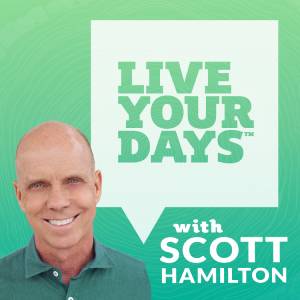
Few athletes have successfully reinvented themselves the way Scott Hamilton has. While millions first came to know him as the charismatic Olympic gold medal-winning figure skater whose performances captivated audiences around the world, his greatest impact may have come after competitive skating ended.
Throughout his life, Hamilton has faced extraordinary personal adversity, including childhood illness, testicular cancer, multiple brain tumors, and numerous surgeries. Rather than allowing those experiences to define him by suffering, he transformed them into a lifelong mission of encouraging others to live with hope, resilience, and intentionality.
Beyond broadcasting, bestselling books, speaking engagements, and philanthropic work, Scott has become a respected advocate for cancer patients through mentoring programs, educational resources, and research initiatives that seek to improve both treatment and quality of life. His Live Your Days movement reflects the philosophy that has emerged from decades of personal challenges: life is fragile, but every day offers an opportunity to choose joy, strengthen faith, serve others, and live with purpose.
In this conversation with The Chris & Sandy Show, Scott shares not simply the story of an Olympic champion, but the journey of a husband, father, survivor, and servant whose greatest victories happened long after stepping off the ice.
Scott Hamilton: Why the Greatest Victory Was Never the Olympic Gold Medal
Olympic champion Scott Hamilton reflects on faith, cancer, resilience, family, and the movement inspiring people to truly live their days.
Most people know Scott Hamilton as one of the greatest figure skaters in history. Olympic gold medals, television broadcasting, bestselling books, sold-out skating tours, and decades of public success have made him one of the most recognizable athletes in America.
Yet during his conversation on The Chris & Sandy Show, the Olympics become almost secondary.
Instead, the conversation becomes about something much larger: what happens after life knocks you down again and again—and why getting back up becomes your greatest achievement.
More than forty years after winning Olympic gold, Hamilton's greatest message isn't about skating. It's about living.
Every Diagnosis Became a New Beginning
Few people have experienced the number of life-threatening medical battles Scott Hamilton has endured.
Childhood illness.
Testicular cancer.
Multiple brain tumors.
Numerous surgeries.
Loss of vision in one eye.
Most people would understandably become defined by those experiences.
Hamilton chose something different.
Rather than asking why these things happened, he began asking what they could teach him.
That mindset eventually gave birth to the Live Your Days movement—a philosophy encouraging people to recognize that while our bodies are incredibly fragile, they are also remarkably resilient, and every day carries significance.
Learning to Choose Joy Instead of Fear
One of the most powerful moments of the interview comes when Scott shares something his wife told him before another MRI.
Joy, she explained, isn't the absence of fear.
It isn't pretending suffering doesn't exist.
Joy is how you choose to move through suffering.
That single perspective changes everything.
Fear may still exist.
Pain may still exist.
Uncertainty may still exist.
But none of them have to determine who you become.
For Scott, every scan became another opportunity to choose joy regardless of the outcome.
That decision didn't remove hardship.
It transformed how hardship was experienced.
Falling Was Always Part of the Journey
Most fans remember Scott Hamilton for landing breathtaking performances.
Scott remembers something else.
The falls.
Estimating that he fell more than 41,000 times throughout his skating career, Hamilton explained that every fall required another decision to stand up.
That simple act became the greatest lesson athletics ever taught him.
Champions aren't built because they never fail.
They're built because failure never becomes permanent.
Years later, cancer required the exact same mindset.
Every diagnosis knocked him down.
Every recovery required another decision to rise.
The skating rink had unknowingly been preparing him for life all along.
Olympic champions don't become champions because of one perfect performance. They become champions because of thousands of ordinary days of practice that no one ever sees. Scott's life reminds us that meaningful lives are built the same way.
Turning Personal Pain Into Someone Else's Hope
Rather than allowing cancer to become only his own story, Hamilton turned it outward.
He realized that newly diagnosed patients often felt overwhelmed—not just medically, but emotionally.
Medical terminology was confusing.
Treatment felt frightening.
Hope often seemed distant.
Instead of accepting that reality, he helped create mentoring programs connecting newly diagnosed patients with survivors who had already walked the same road.
He also championed educational resources that explain chemotherapy in language ordinary families can understand.
His mission wasn't simply to help people survive cancer.
It was to help them navigate it with less fear.
Perhaps that's the defining theme of Scott Hamilton's life.
Every difficult chapter eventually became an opportunity to serve someone else.
Faith Became the Foundation
Throughout the interview, faith isn't presented as a performance.
It's presented as a relationship.
Hamilton openly discusses how understanding God's love reshaped his perspective on life, suffering, family, and purpose.
Rather than viewing illness as punishment, he began seeing every season as an invitation to grow stronger—physically, emotionally, intellectually, and spiritually.
He describes those four areas as the legs of a chair.
Remove one, and eventually the entire structure becomes unstable.
Strength, therefore, isn't one-dimensional.
It's holistic.
It's becoming healthy in every part of life.
7 Lessons We Learned From Scott Hamilton
This conversation reaches far beyond Olympic medals and championship performances. Scott Hamilton's story demonstrates that the greatest victories often happen long after the spotlight fades. Through repeated health battles, deep faith, family, and an unwavering commitment to serving others, he offers timeless lessons that anyone can apply—whether facing illness, career setbacks, loss, or simply the everyday challenges of life.
Lesson 1: The Strongest People Aren't the Ones Who Never Fall—They're the Ones Who Keep Getting Up
Scott Hamilton estimates that he fell more than 41,600 times during his skating career. While most people remember Olympic routines and championship moments, Scott remembers something far less glamorous: the falls.
That perspective changes everything.
Success is often celebrated by highlighting victories while ignoring the thousands of unseen failures that made those victories possible. Scott reminds us that resilience isn't developed when life is easy. It's built one decision at a time, every time we choose to stand back up after disappointment.
His skating career unknowingly prepared him for cancer, brain tumors, surgeries, and countless medical setbacks. The same discipline that helped him return to his feet after falling on the ice became the mindset that carried him through hospital rooms.
Whether someone is rebuilding a business, restoring a marriage, recovering from addiction, grieving a loss, or simply trying again after failure, the principle remains the same:
You don't become resilient because life is easy.
You become resilient because you refuse to stay down.
Lesson 2: Joy Is a Decision, Not a Circumstance
One of the most profound moments of the interview came through something Scott's wife shared before another MRI.
She said:
"Joy isn't a lack of fear and suffering. It's how you go through it."
That statement dismantles one of the biggest misconceptions about happiness.
Many people postpone joy until life improves.
Until the diagnosis changes.
Until finances recover.
Until relationships heal.
Until anxiety disappears.
Scott offers another path.
Joy isn't pretending everything is okay.
Joy is refusing to let difficult circumstances become the final authority over your attitude.
That perspective doesn't eliminate pain.
It transforms the way pain is experienced.
For anyone navigating uncertainty, this lesson may become one of the most freeing truths in the entire interview.
Lesson 3: Pain Can Become Purpose If You're Willing to Share It
Scott could have quietly survived cancer and moved on with his career.
Instead, he asked a different question.
"What did I need that other patients still don't have?"
That question changed thousands of lives.
His experience inspired mentoring programs connecting newly diagnosed cancer patients with survivors who understood exactly what they were facing.
He helped create educational resources that explain chemotherapy in language ordinary people can actually understand.
Rather than allowing suffering to end with him, he transformed it into something that now serves others every day.
This is one of the clearest examples of purpose emerging from pain.
Our deepest wounds often become our greatest opportunities to help someone else.
Pain that stays hidden usually continues hurting.
Pain that's redeemed often becomes healing for others.
Lesson 4: Faith Is Meant to Strengthen, Not Control
Throughout the conversation, Scott carefully distinguishes faith from religion.
He doesn't dismiss religion.
Instead, he acknowledges that religion can sometimes become weaponized or misunderstood while emphasizing that faith is rooted in understanding God's love.
That distinction matters.
His relationship with God became increasingly personal through illness, marriage, and life's unexpected turns.
Rather than viewing faith as merely following rules, Scott describes it as recognizing that we are deeply loved and allowing that truth to reshape how we live.
It's a reminder that genuine faith doesn't simply prepare people for eternity.
It changes how they face today.
When life becomes uncertain, faith provides something stronger than answers.
It provides confidence that we don't walk through suffering alone.
Lesson 5: Every Day Is More Valuable Than We Realize
One statement captures the heart of the entire Live Your Days movement:
"Our bodies are fragile.
They're resilient.
But they're temporary."
Most people intellectually understand life is limited.
Very few actually live that way.
Repeated cancer diagnoses forced Scott to confront mortality far earlier and more frequently than most people ever will.
Instead of allowing that realization to produce fear, it produced intentionality.
He became more focused on relationships.
More focused on purpose.
More focused on gratitude.
More focused on serving.
The lesson isn't to become obsessed with death.
It's to become intentional about life.
Every ordinary Tuesday matters.
Every conversation matters.
Every relationship matters.
Because eventually, our collection of ordinary days becomes our legacy.
Lesson 6: Showing Up Is More Powerful Than Feeling Ready
Scott repeatedly returned to one surprisingly simple principle:
Show up.
Elite athletes don't wake up every morning overflowing with motivation.
They show up anyway.
Parents don't always feel equipped.
They show up anyway.
Entrepreneurs don't always feel confident.
They show up anyway.
Faith often works the same way.
There are seasons when emotions feel absent.
Hope feels weak.
Answers seem distant.
Yet faith continues showing up.
Consistency has a way of accomplishing what occasional inspiration never can.
Many people overestimate talent while underestimating faithfulness.
Scott's career reminds us that greatness is usually built through ordinary acts of consistency repeated over many years.
Lesson 7: Success Means Very Little If It Doesn't Lead to Service
Olympic gold made Scott Hamilton famous.
Cancer revealed his mission.
That may be the most remarkable transformation discussed during this interview.
His accomplishments gave him influence.
His suffering gave him empathy.
Together they created purpose.
Today, his legacy isn't measured only by medals.
It's measured by the lives encouraged through cancer advocacy, patient mentoring, educational resources, and the Live Your Days movement.
Many people spend their lives asking,
"How can I become successful?"
Scott eventually began asking,
"How can my success help someone else?"
That subtle shift changes everything.
Success accumulates.
Service multiplies.
And multiplied lives become lasting legacies.
The Single Biggest Lesson From This Interview
If someone remembered only one lesson from this conversation five years from now, it should be this:
Life is not measured by what happens to you—it is measured by how you choose to respond to what happens to you.
Scott Hamilton never minimized pain.
He never suggested faith eliminates suffering.
He never pretended fear doesn't exist.
Instead, he demonstrated that resilience grows through repeated choices. Choosing hope instead of despair. Choosing joy instead of bitterness. Choosing service instead of self-pity. Choosing faith instead of fear.
Those choices shaped every chapter of his story—from Olympic champion to cancer survivor, husband, father, advocate, and encourager.
His life reminds us that adversity does not have the final word.
Character does.
Top 5 Quotes
"Joy isn't a lack of fear and suffering. It's how you go through it."
"Our bodies are incredibly vulnerable...but they're also incredibly resilient."
"When you fall down 41,600 times, you get up 41,600 times."
"Nothing comes from a no. It starts with a yes."
"You are loved. Deal with it."
Archive Note: This interview was originally recorded on October 9, 2020. While some projects, organizations, or references may have evolved since then, the lessons on faith, resilience, hope, perseverance, and living with purpose remain timeless.